
Tankbook: Fuel Log & MPG
Litros no tanque. Consumo na tela. Nas suas unidades, não nas nossas.
- IOS
- ANDROID
- Utilidade
- Em breve
Sobre o Tankbook
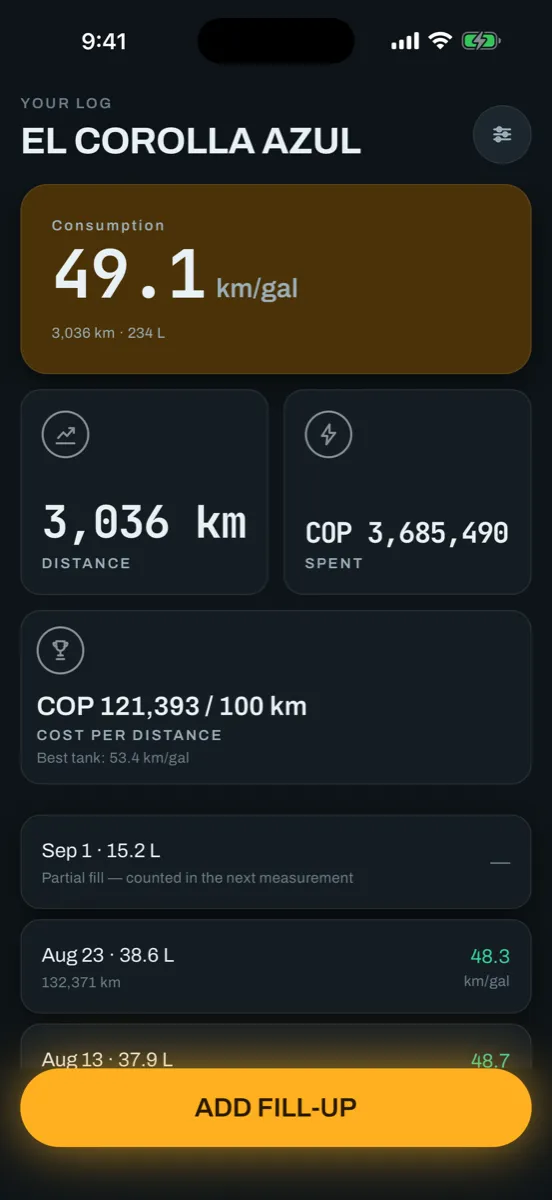
Um registro de combustível e custos do veículo que acerta nas contas. Anote o que você realmente colocou no tanque, na unidade em que realmente compra, e veja o consumo na unidade em que você realmente pensa — litros por 100 km, km por litro, MPG ou km por galão. Abastecimentos parciais entram no intervalo a que pertencem em vez de inventar um número, e quando o app não tem como saber, ele avisa em vez de chutar. Sem conta, sem servidor, funciona no posto mesmo sem sinal.
Recursos
As unidades que você usa de verdade
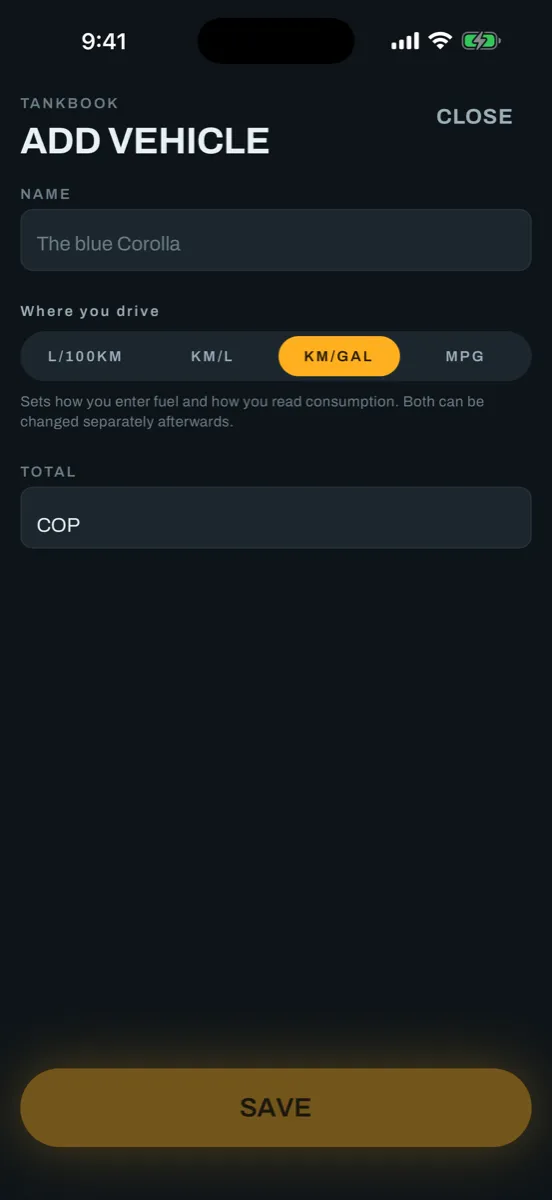
Compre em litros e leia em MPG imperial. Compre em litros e leia em km por galão. Unidade de entrada e unidade de exibição são ajustes separados, porque, para a maior parte do mundo, elas são
Abastecimentos parciais calculados direito
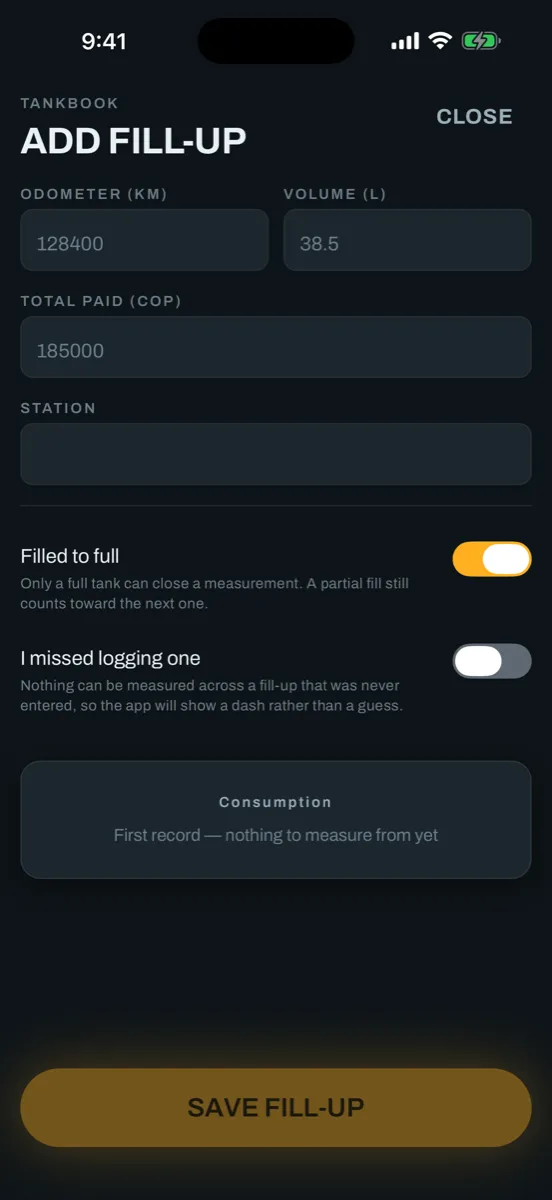
Um pouquinho de combustível faz parte de um intervalo, não é um dado isolado. O Tankbook mede de tanque cheio a tanque cheio e incorpora os parciais, então você nunca vê uma linha de 300 mpg
Ele se abstém em vez de chutar
Esqueceu um abastecimento? O hodômetro voltou? O Tankbook mostra um traço e explica o motivo, em vez de exibir um número plausível que você não tem como conferir
Registre depois um abastecimento esquecido
Os registros são ordenados pelo hodômetro, então um recibo que você encontra uma semana depois se encaixa no lugar certo — sem apagar tudo o que veio depois
Qualquer moeda, nunca convertida
A moeda fica no registro, não no veículo, então cruzar a fronteira não é problema. Nada é convertido, porque uma conversão honesta exige cotações históricas e internet
Exportar é grátis, sempre
Seus próprios dados atrás de um paywall não são um recurso. Exporte em CSV quando quiser
Capturas de tela
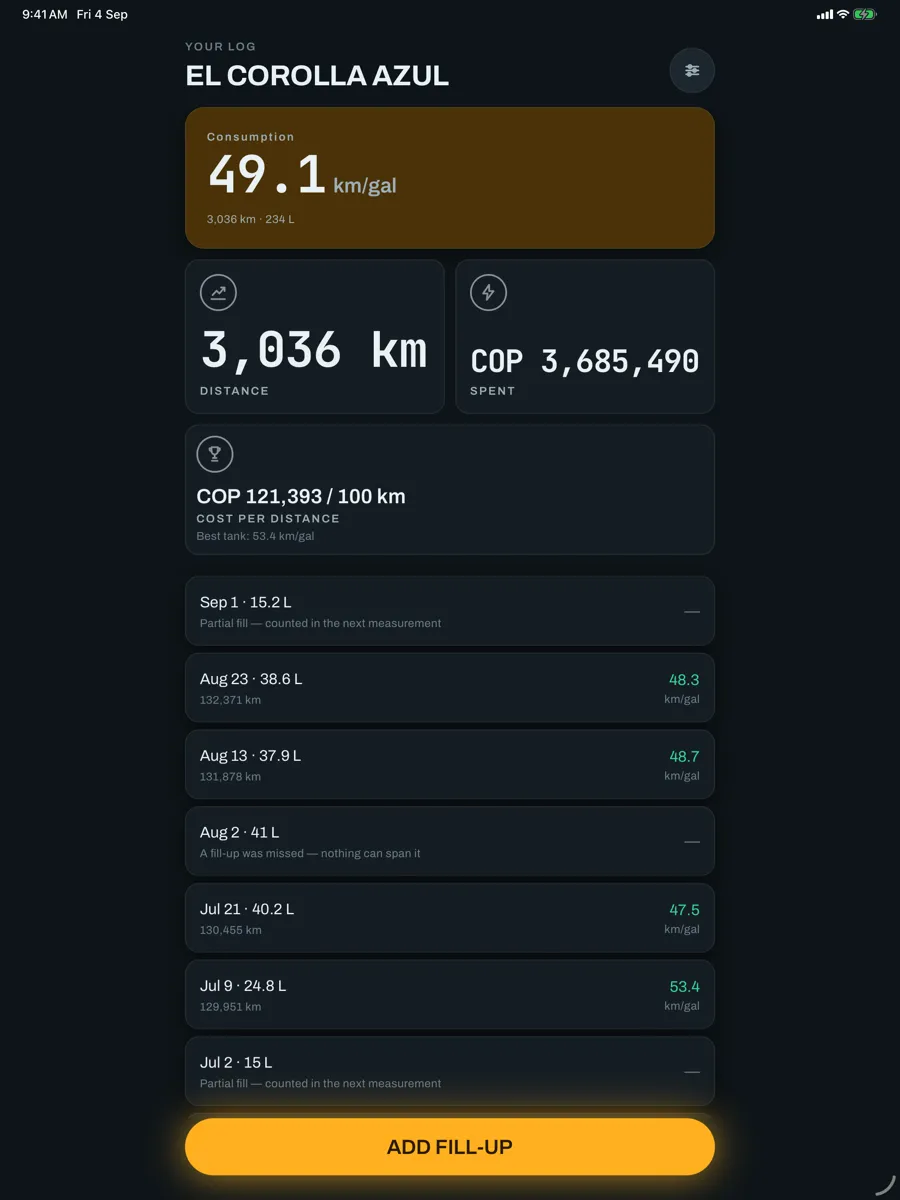
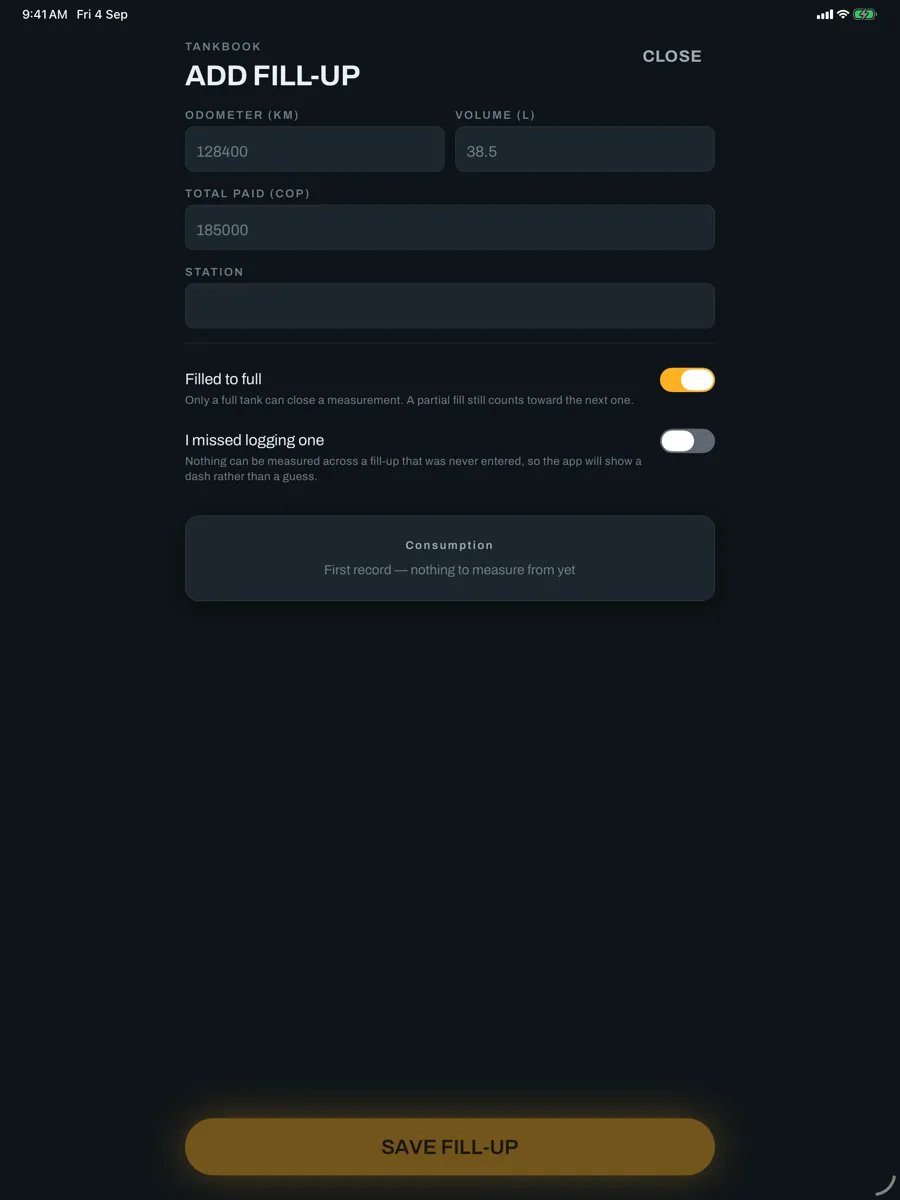
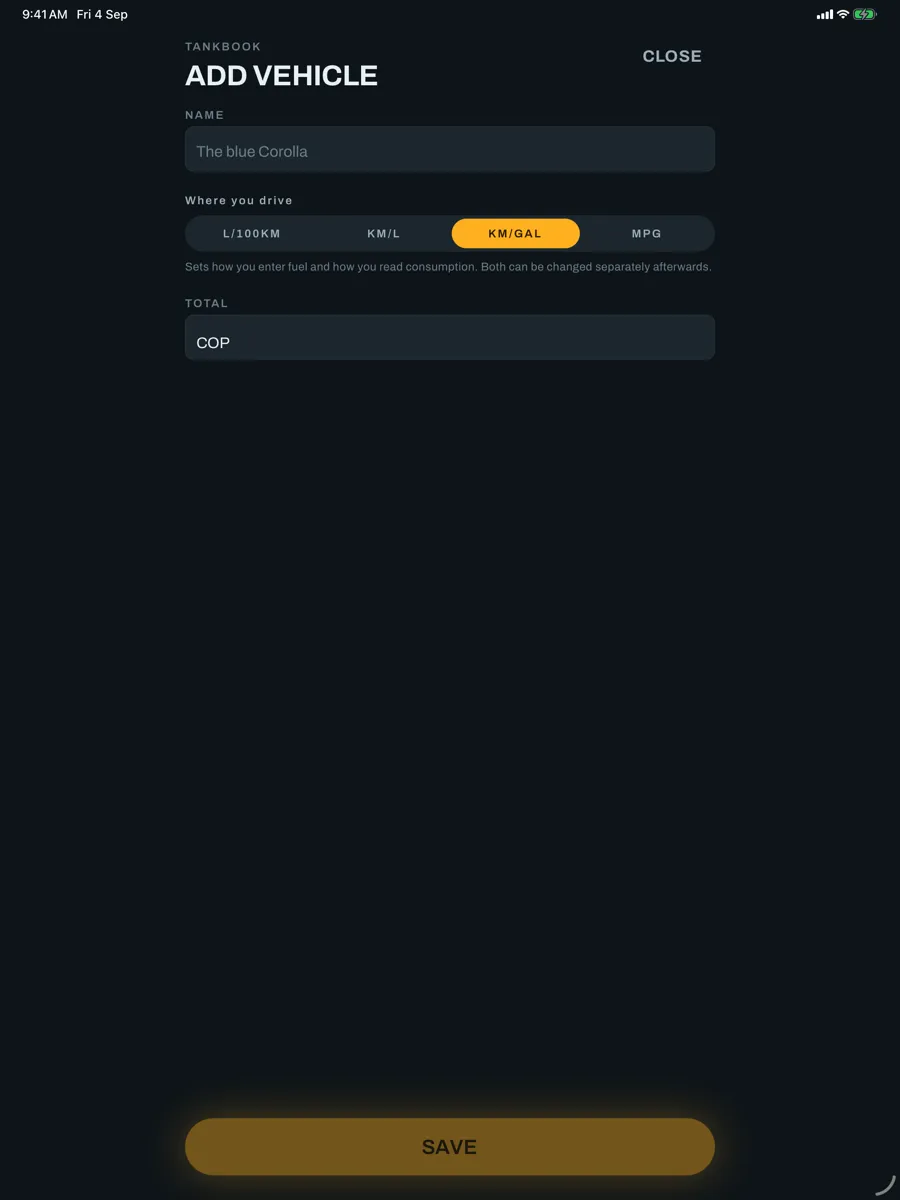
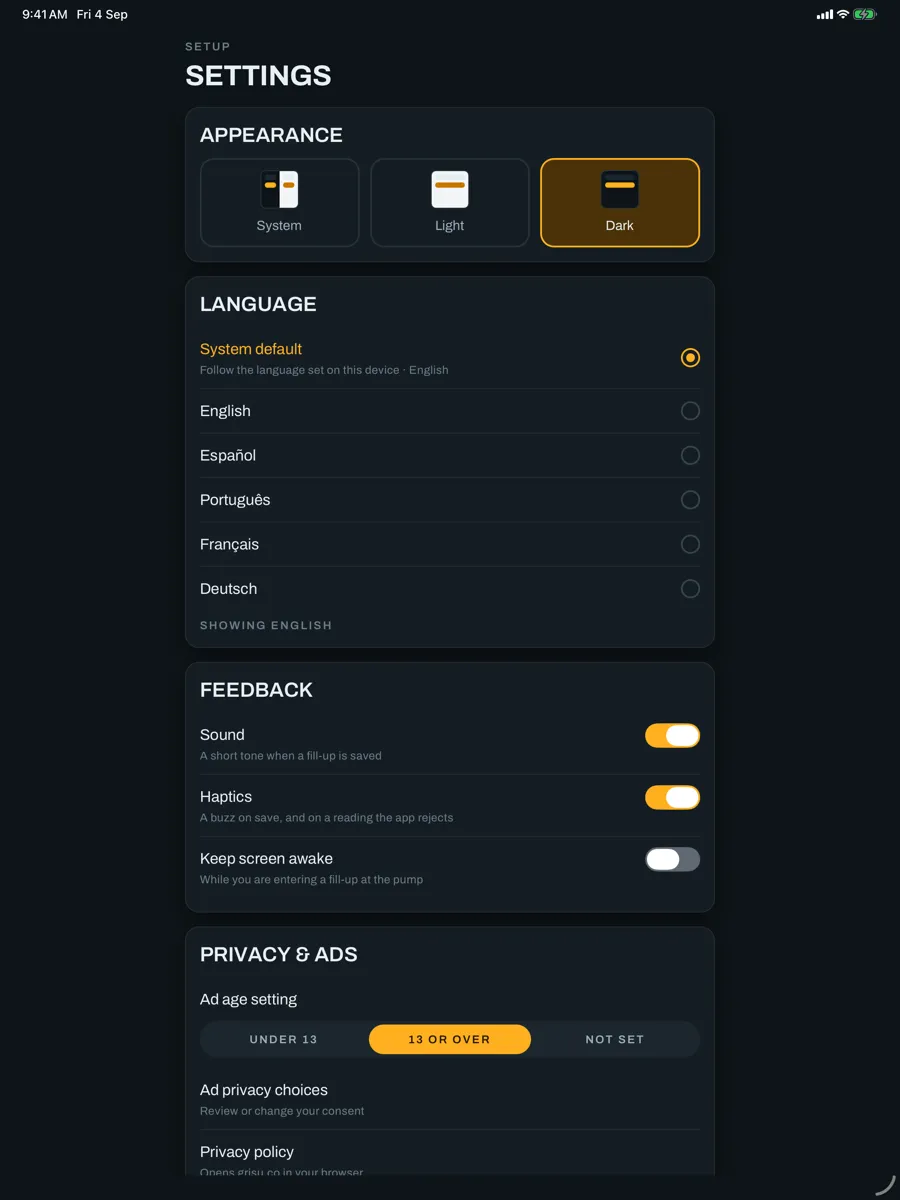
O texto detalhado abaixo ainda não foi traduzido e é exibido em inglês.
The bug in every other fuel log
Consumption can only be measured across a stretch whose tank level is known at both ends, and the only level that is cheaply known is full.
That single sentence is why a partial fill is part of a measurement rather than a measurement of its own. Apps that divide each record’s volume by the distance since the last one produce the figures their reviewers complain about — one competitor’s users report entries reading 300 mpg, another’s report 35 mpg where the arithmetic plainly says 64.7.
Tankbook measures full tank to full tank and folds every partial fill into the interval it belongs to. The fuel burned over a stretch is everything you added after the first full tank, including the one that filled it up again — off by one in either direction and you are a whole tank out.
Where it stays quiet
The first record can never produce a figure. Nor can a stretch that spans a fill-up you forgot to log, or one where the odometer reads lower than it did before.
In all three cases Tankbook shows a dash and tells you which it is. A number you cannot check is worse than no number, and every “this app fails at basic math” review is an app that guessed.
Written for the units the world actually uses
A British driver buys petrol in litres and thinks in miles per imperial gallon. A Colombian buys litres and thinks in kilómetros por galón. A German buys litres and thinks in litres per hundred kilometres.
Those are three different combinations of three different settings, and Tankbook treats entry units and display units as independent from the start. Consumption is always aggregated as total distance over total volume and converted only for display — averaging a column of MPG figures gives a different answer from the real one, and the driver notices.
Mais apps como Tankbook
-

Aubade: Daily Affirmations
Uma frase por dia, no papel e na sua tela de início.
-

Valise: Trip Planner & Split
O plano, o mapa e o dinheiro de uma viagem, numa mala no seu celular.
-

Quadrille: QR Scanner & Maker
Códigos QR como objetos de design: estilize, escaneie, guarde.
-

Paid in Full: Debt Free Date
Veja sua data sem dívidas, quanto custam os juros e tarifas, e acompanhe cada pagamento.