
Tankbook
Litros al tanque. Consumo en tus unidades, no en las nuestras.
- IOS
- ANDROID
- Utilidad
- Próximamente
Sobre Tankbook
Un registro de combustible y gastos que hace bien las cuentas. Anota lo que realmente echaste al tanque, en las unidades en que realmente lo compras, y lee tu consumo en las unidades en que realmente piensas — litros por 100 km, km por litro, o kilómetros por galón. Los tanqueos parciales se suman al tramo al que pertenecen en vez de inventar una cifra, y donde la aplicación no puede saber, lo dice en vez de adivinar. Sin cuenta, sin servidor, funciona en la bomba sin señal.
Características
The Units You Actually Use
Buy in litres and read imperial MPG. Buy in litres and read km per gallon. Entry unit and display unit are separate settings, because for most of the world they are
Partial Fills Done Correctly
A splash of fuel is part of an interval, not a data point. Tankbook measures full tank to full tank and folds the partials in, so you never see a 300 mpg row
It Abstains Instead Of Guessing
Missed a fill-up? Odometer went backwards? Tankbook shows a dash and tells you why, rather than printing a plausible number you cannot check
Back-Date A Forgotten Fill
Records sort by odometer, so a receipt you find a week later slots into place — no deleting everything after it
Any Currency, Never Converted
Currency lives on the record, not the vehicle, so a border run is fine. Nothing is converted, because honest conversion needs historical rates and a network
Export Is Free, Always
Your own data behind a paywall is not a feature. CSV out, whenever you want it
Capturas
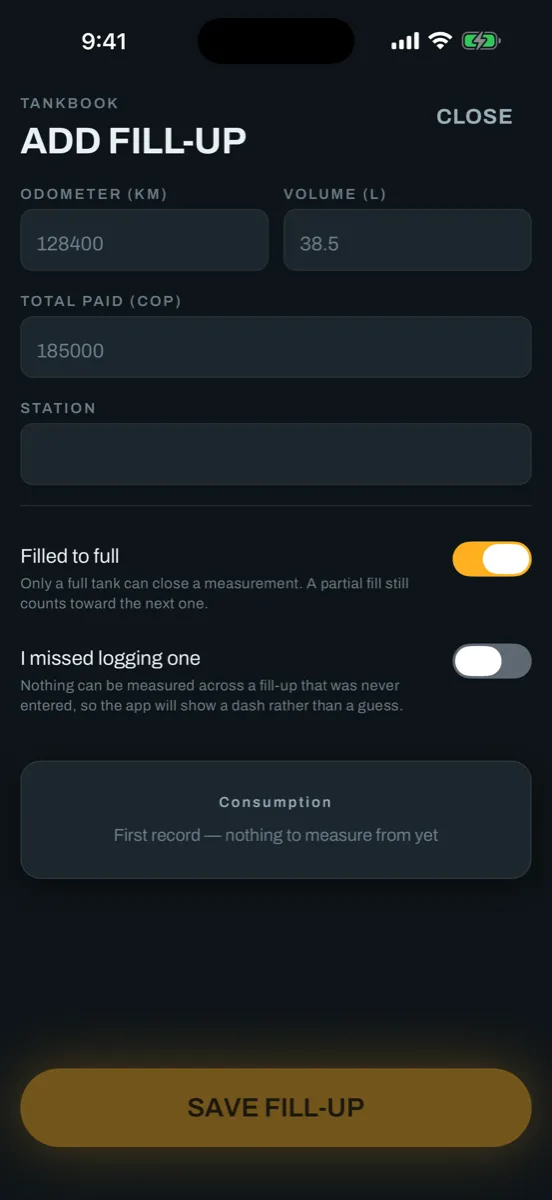
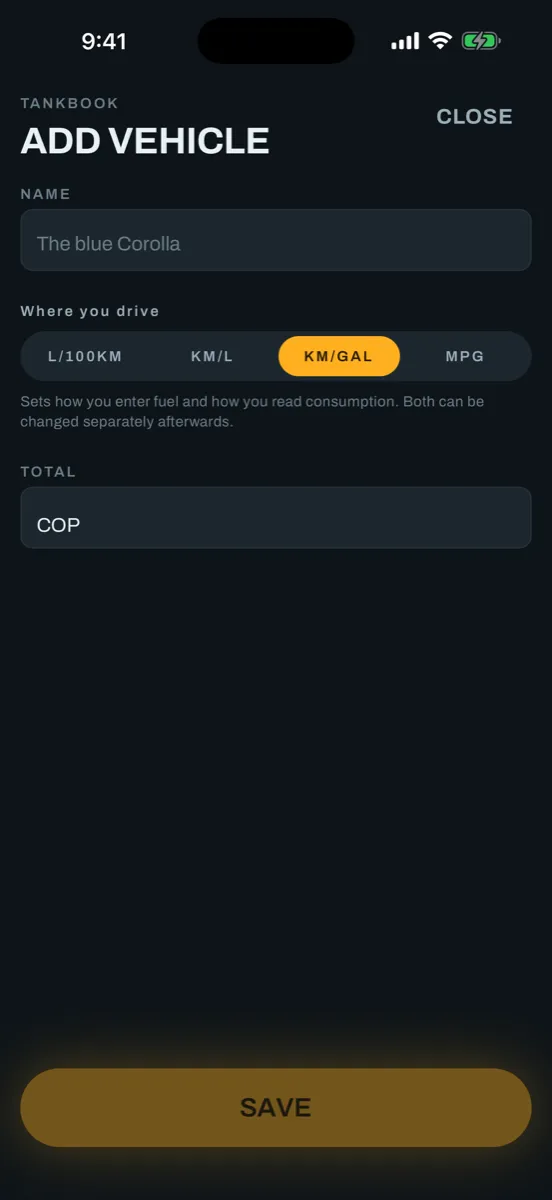
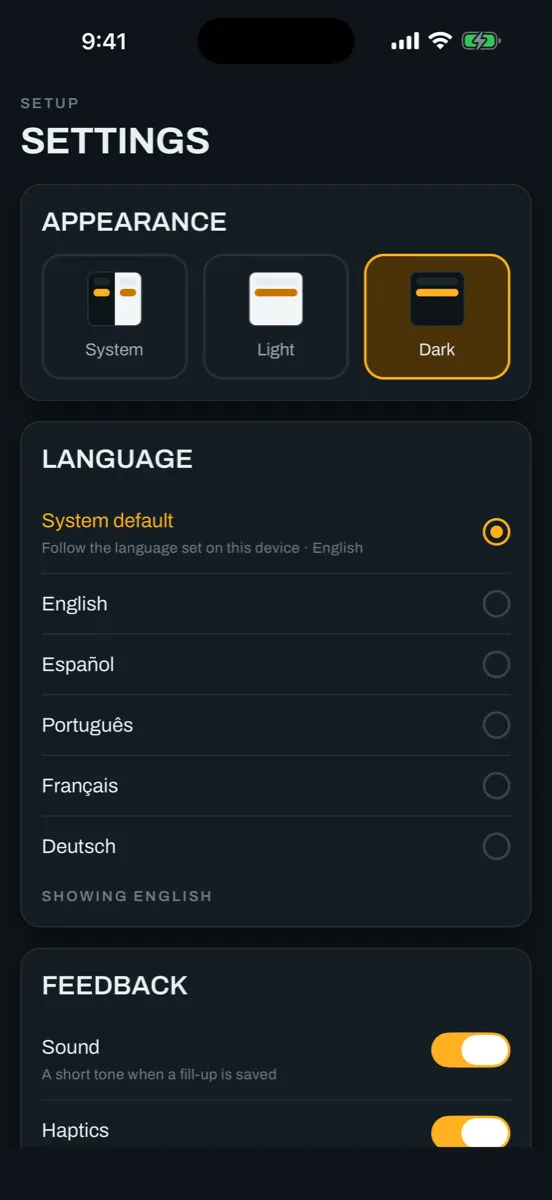
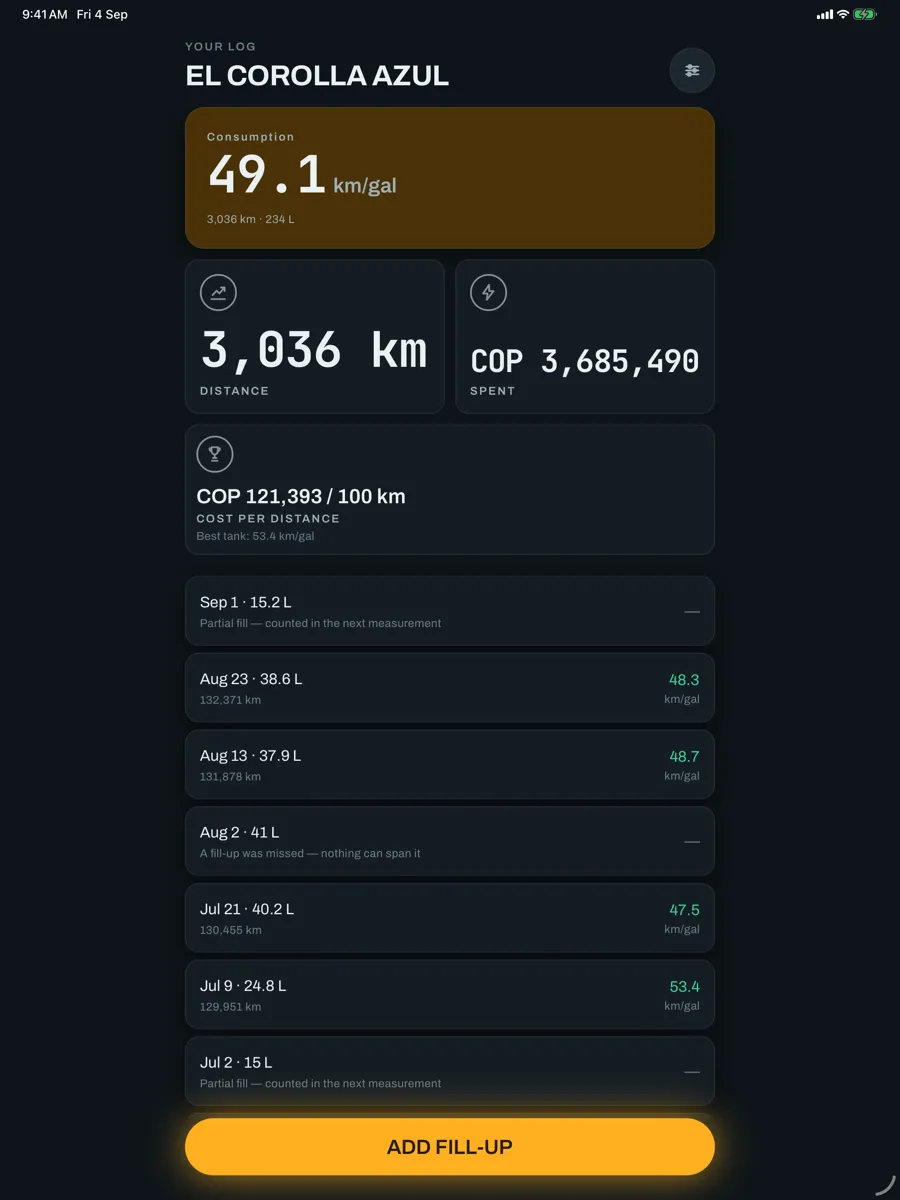
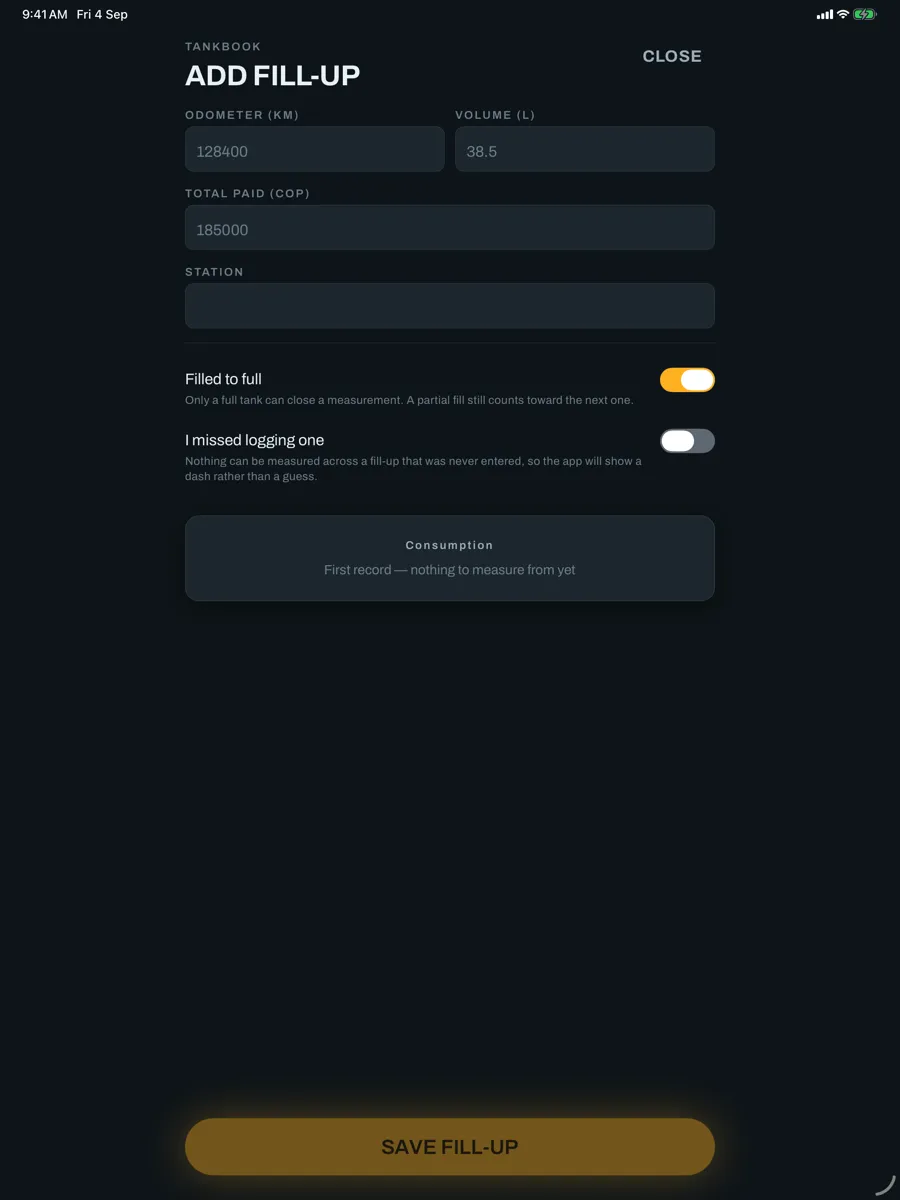
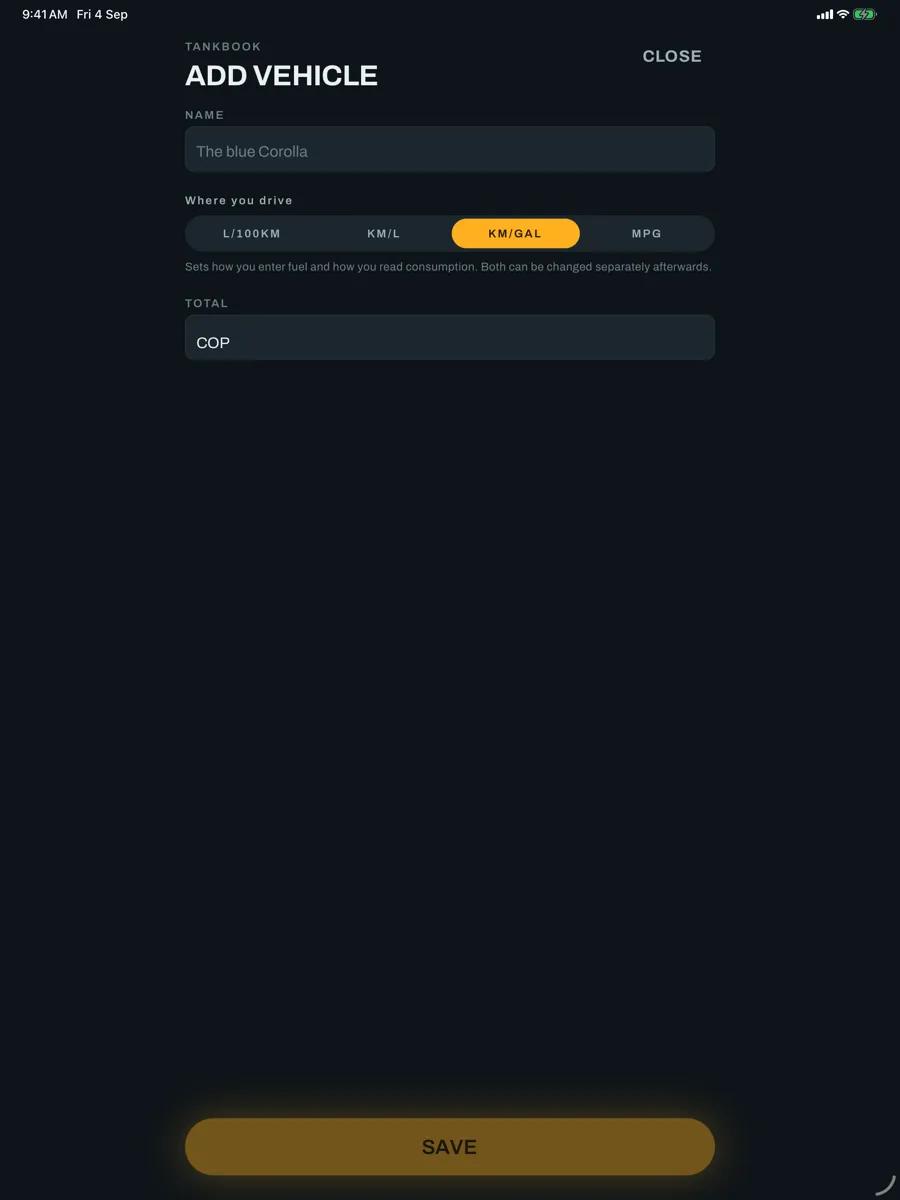
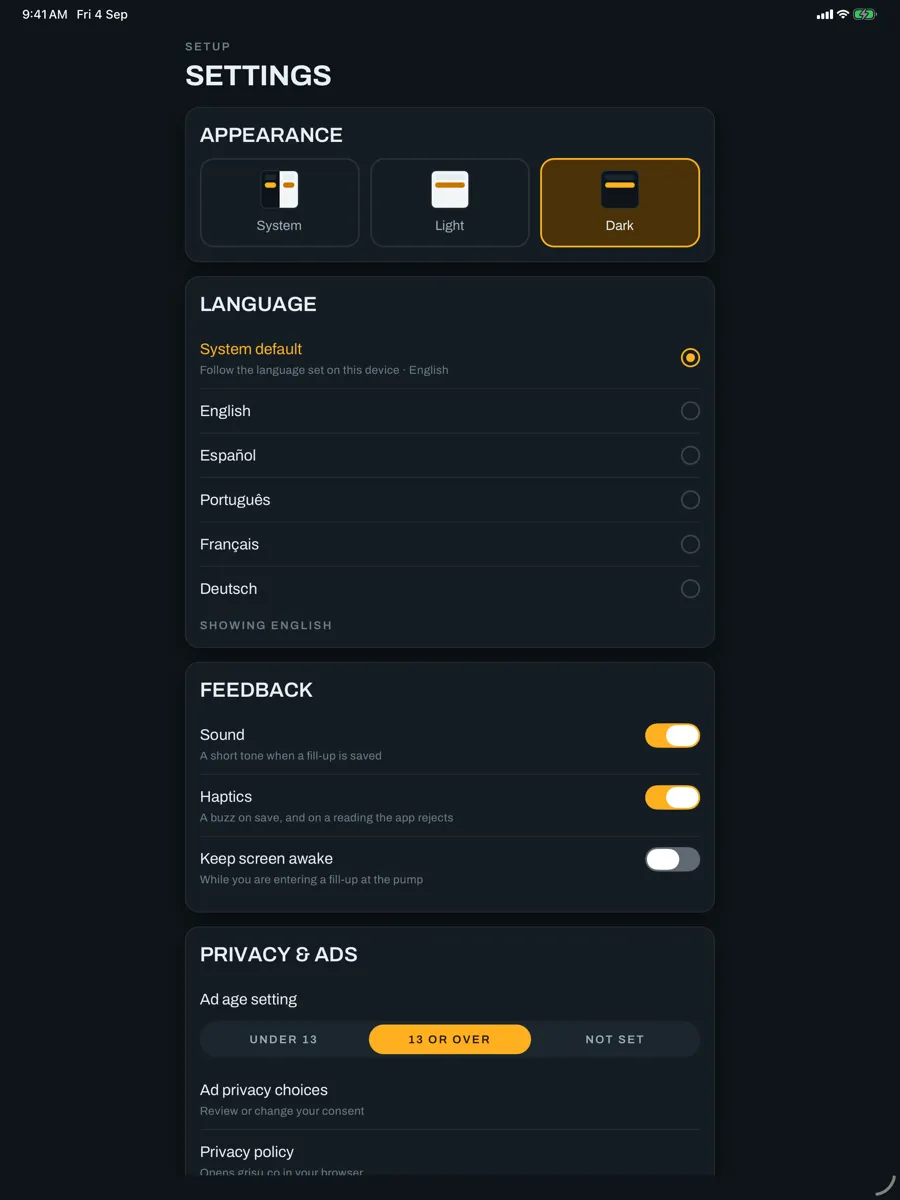
El texto detallado que sigue aún no está traducido y se muestra en inglés.
The bug in every other fuel log
Consumption can only be measured across a stretch whose tank level is known at both ends, and the only level that is cheaply known is full.
That single sentence is why a partial fill is part of a measurement rather than a measurement of its own. Apps that divide each record’s volume by the distance since the last one produce the figures their reviewers complain about — one competitor’s users report entries reading 300 mpg, another’s report 35 mpg where the arithmetic plainly says 64.7.
Tankbook measures full tank to full tank and folds every partial fill into the interval it belongs to. The fuel burned over a stretch is everything you added after the first full tank, including the one that filled it up again — off by one in either direction and you are a whole tank out.
Where it stays quiet
The first record can never produce a figure. Nor can a stretch that spans a fill-up you forgot to log, or one where the odometer reads lower than it did before.
In all three cases Tankbook shows a dash and tells you which it is. A number you cannot check is worse than no number, and every “this app fails at basic math” review is an app that guessed.
Written for the units the world actually uses
A British driver buys petrol in litres and thinks in miles per imperial gallon. A Colombian buys litres and thinks in kilómetros por galón. A German buys litres and thinks in litres per hundred kilometres.
Those are three different combinations of three different settings, and Tankbook treats entry units and display units as independent from the start. Consumption is always aggregated as total distance over total volume and converted only for display — averaging a column of MPG figures gives a different answer from the real one, and the driver notices.