
Tankbook: Fuel Log & MPG
Liter rein. Verbrauch raus. In deinen Einheiten, nicht in unseren.
- IOS
- ANDROID
- Werkzeuge
- Demnächst
Über Tankbook
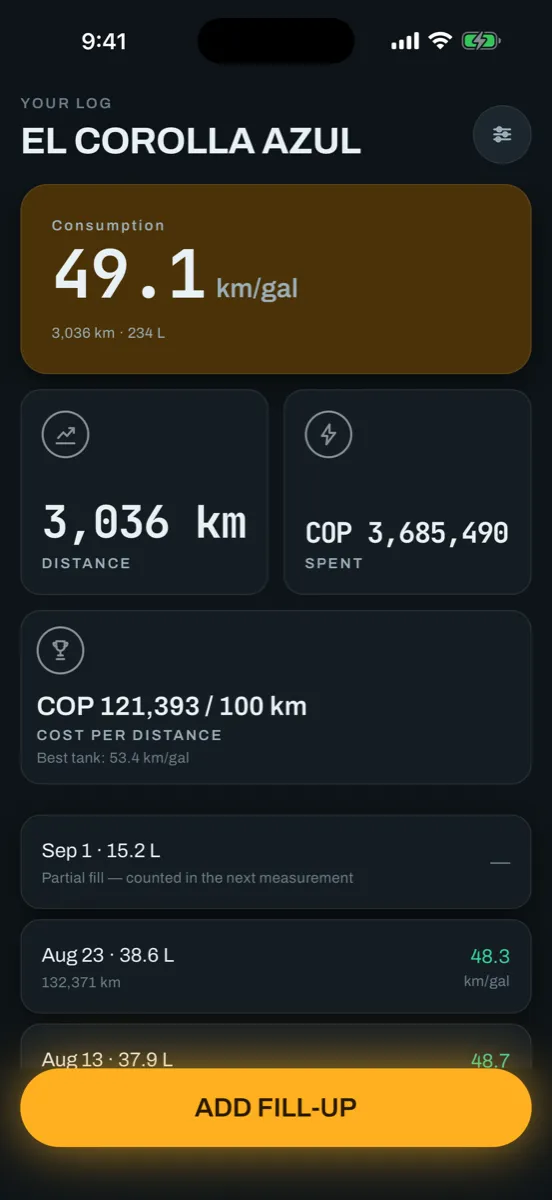
Ein Tank- und Kostenbuch, das richtig rechnet. Trag ein, was du wirklich getankt hast, in der Einheit, in der du es wirklich kaufst, und lies deinen Verbrauch in der Einheit, in der du wirklich denkst – Liter pro 100 km, km pro Liter, MPG oder km pro Gallone. Teilbetankungen fließen in das Intervall ein, zu dem sie gehören, statt eine Zahl zu erfinden, und wo die App es nicht wissen kann, sagt sie das, statt zu raten. Kein Konto, kein Server, funktioniert an der Zapfsäule auch ohne Empfang.
Funktionen
Die Einheiten, die du wirklich nutzt
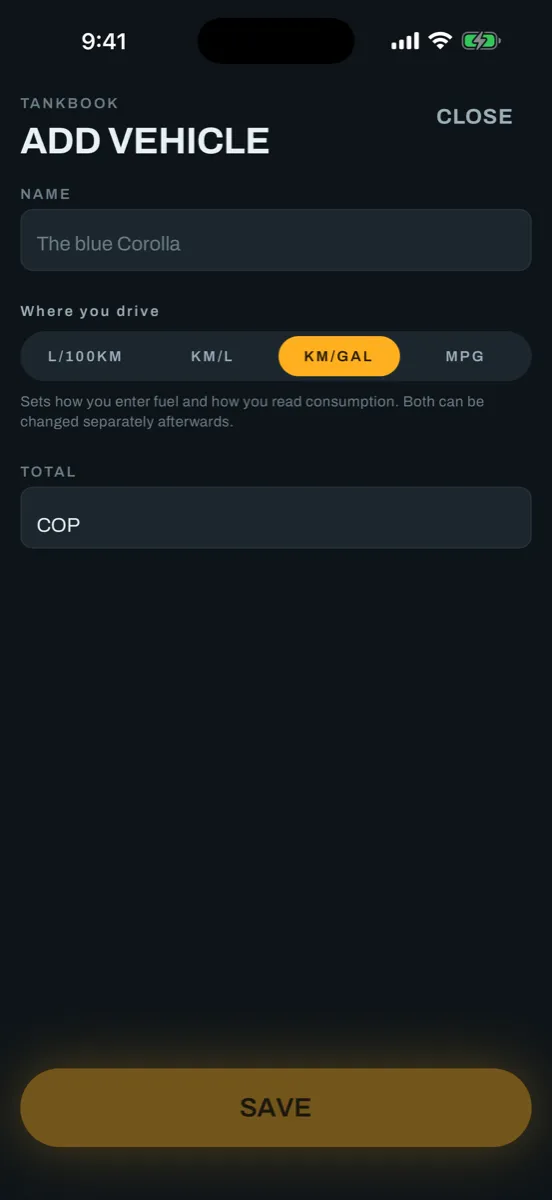
In Litern tanken und imperiale MPG ablesen. In Litern tanken und km pro Gallone ablesen. Eingabe- und Anzeigeeinheit sind getrennte Einstellungen, weil sie es für den Großteil der Welt auch sind
Teilbetankungen richtig gerechnet
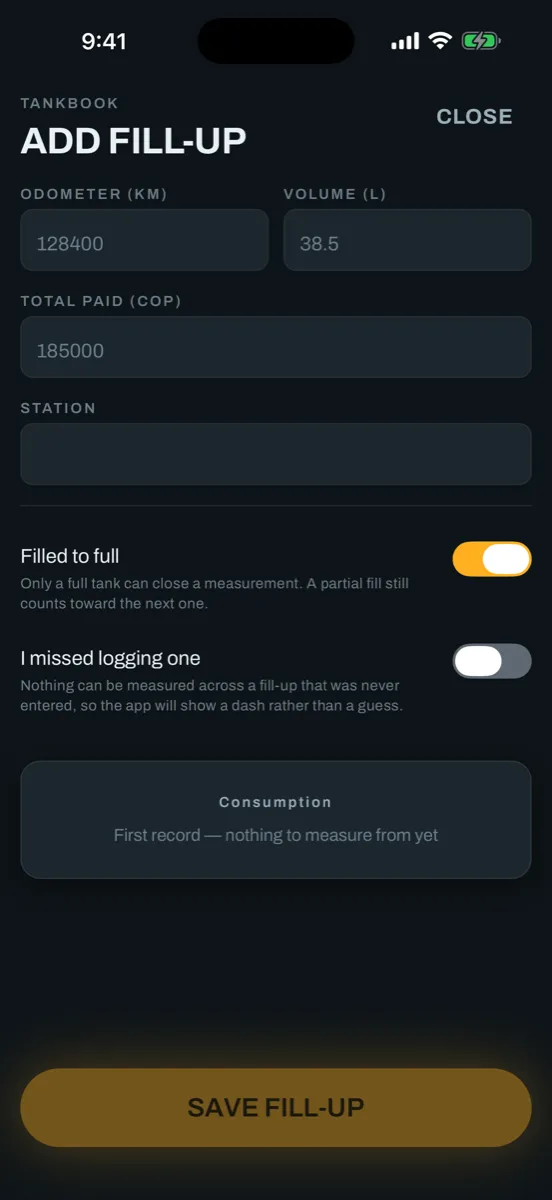
Ein Schluck Sprit ist Teil eines Intervalls, kein eigener Messpunkt. Tankbook misst von voll bis voll und rechnet die Teilbetankungen ein, sodass du nie eine Zeile mit 300 mpg siehst
Lieber keine Zahl als geraten
Eine Tankfüllung vergessen? Der Kilometerstand ist zurückgegangen? Tankbook zeigt einen Strich und sagt dir, warum, statt eine plausible Zahl anzuzeigen, die du nicht prüfen kannst
Vergessene Tankfüllung nachtragen
Einträge werden nach Kilometerstand sortiert, also rutscht ein Beleg, den du eine Woche später findest, an die richtige Stelle – ohne alles danach zu löschen
Jede Währung, nie umgerechnet
Die Währung hängt am Eintrag, nicht am Fahrzeug, also ist eine Fahrt über die Grenze kein Problem. Nichts wird umgerechnet, denn eine ehrliche Umrechnung braucht historische Kurse und eine Internetverbindung
Export ist kostenlos, immer
Deine eigenen Daten hinter einer Bezahlschranke sind kein Feature. CSV-Export, wann immer du willst
Screenshots
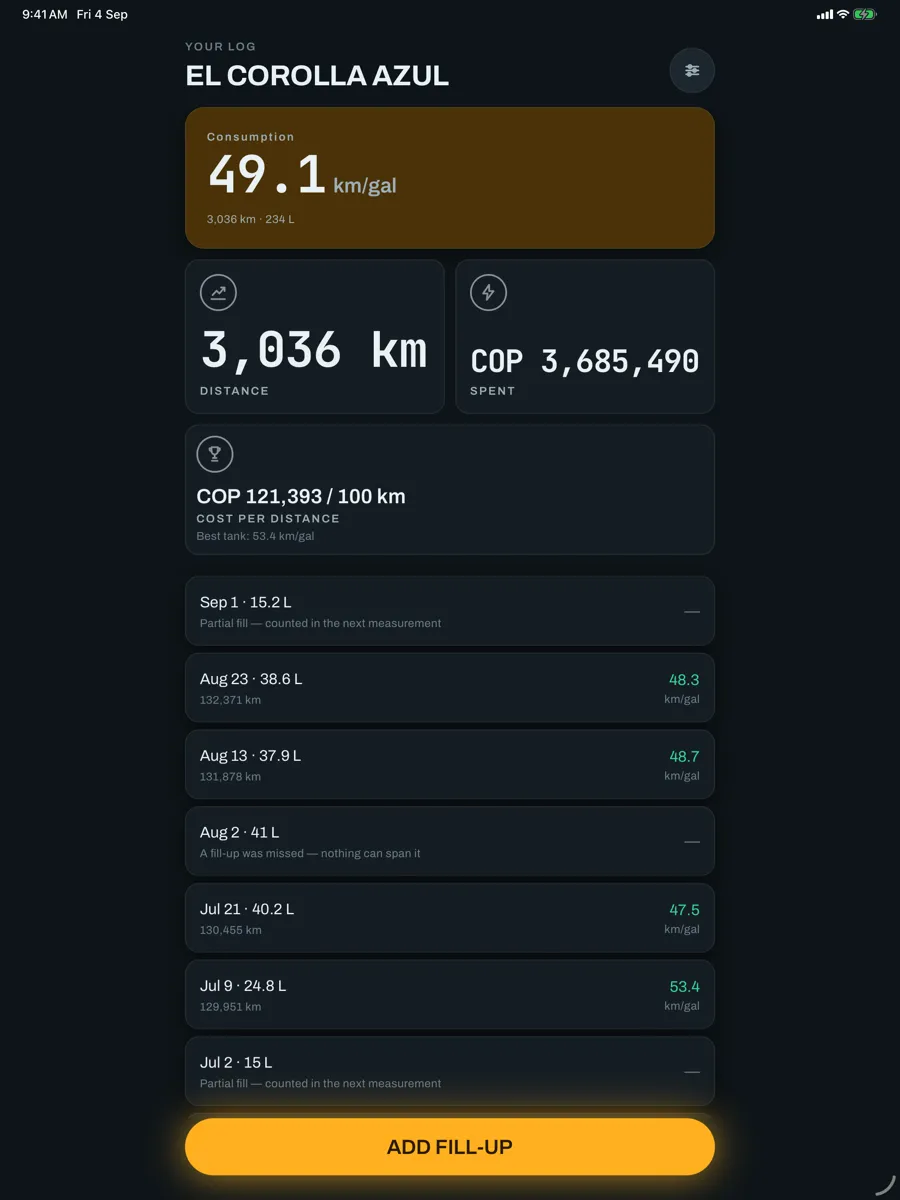
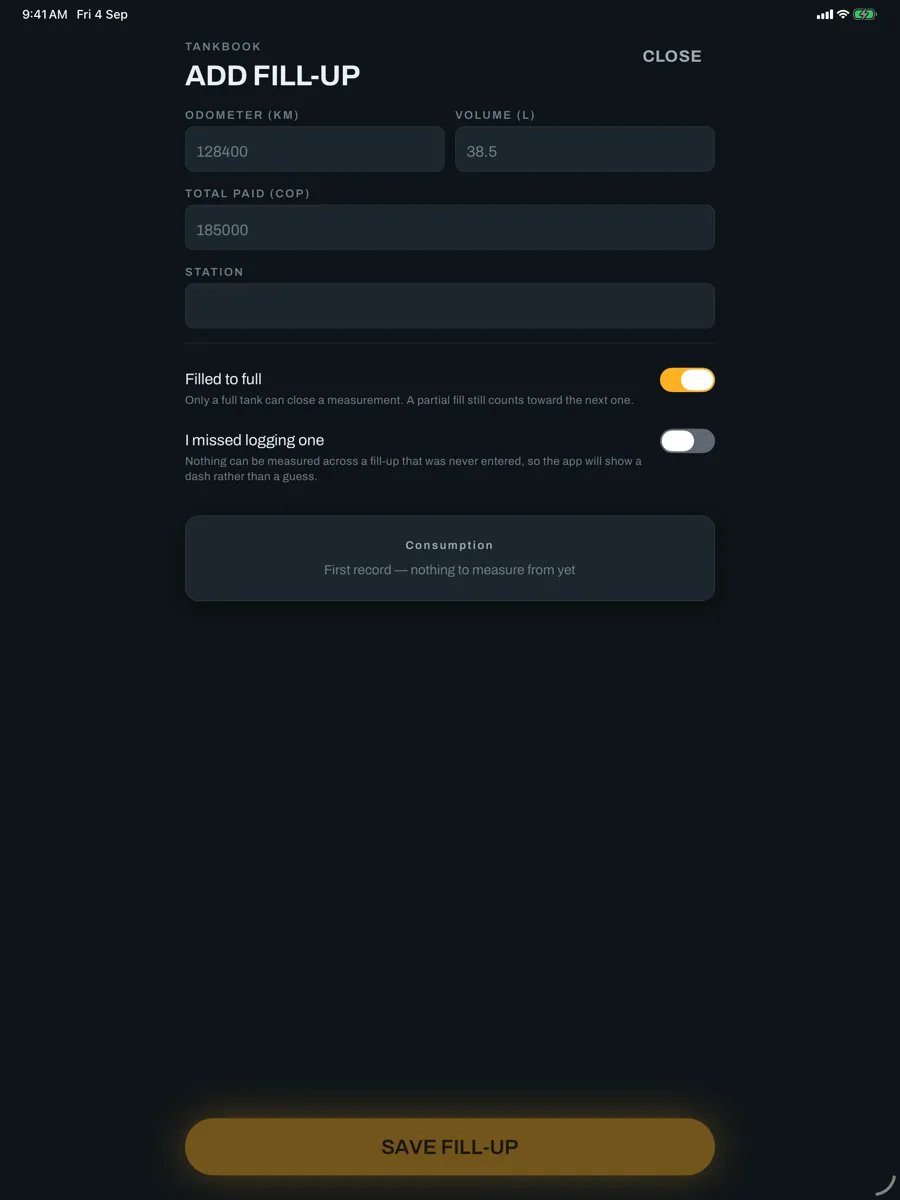
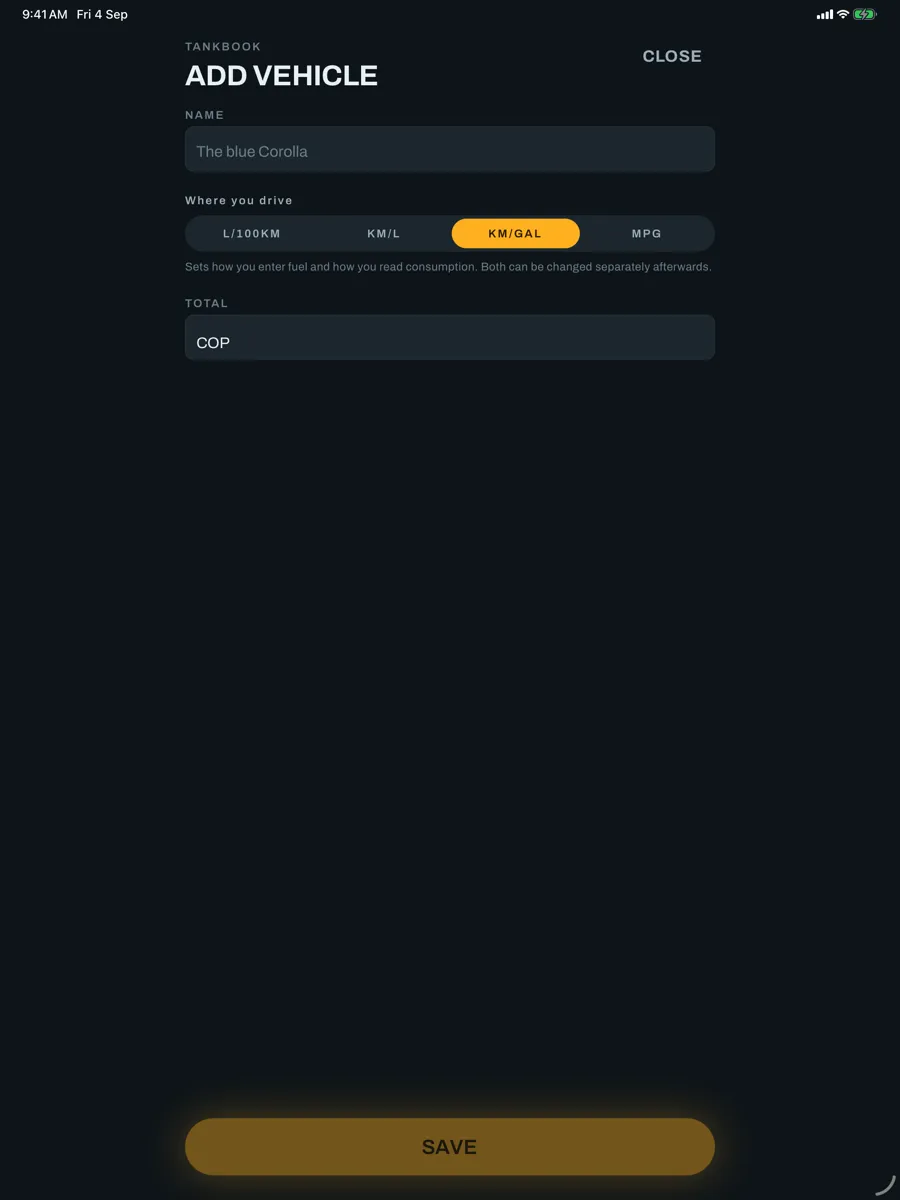
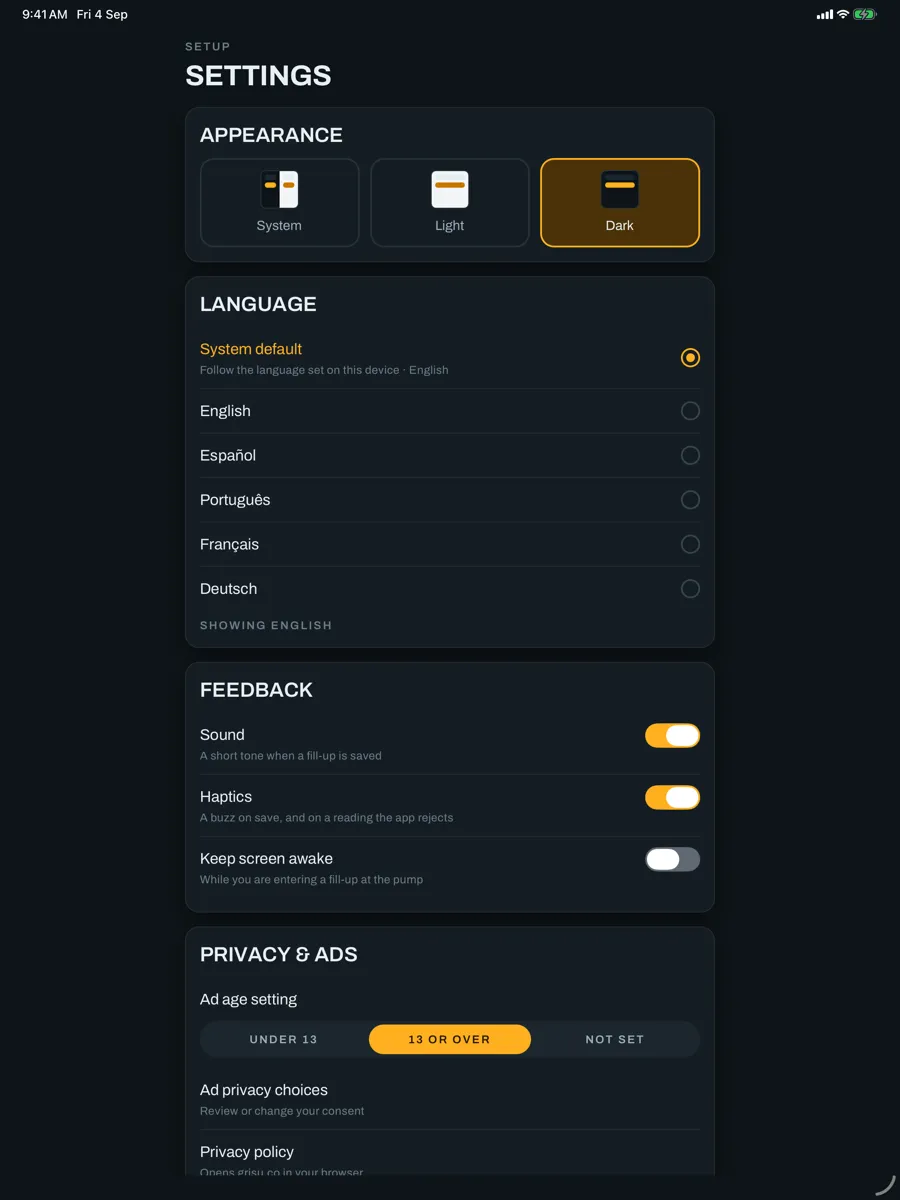
Der ausführliche Text unten ist noch nicht übersetzt und wird auf Englisch angezeigt.
The bug in every other fuel log
Consumption can only be measured across a stretch whose tank level is known at both ends, and the only level that is cheaply known is full.
That single sentence is why a partial fill is part of a measurement rather than a measurement of its own. Apps that divide each record’s volume by the distance since the last one produce the figures their reviewers complain about — one competitor’s users report entries reading 300 mpg, another’s report 35 mpg where the arithmetic plainly says 64.7.
Tankbook measures full tank to full tank and folds every partial fill into the interval it belongs to. The fuel burned over a stretch is everything you added after the first full tank, including the one that filled it up again — off by one in either direction and you are a whole tank out.
Where it stays quiet
The first record can never produce a figure. Nor can a stretch that spans a fill-up you forgot to log, or one where the odometer reads lower than it did before.
In all three cases Tankbook shows a dash and tells you which it is. A number you cannot check is worse than no number, and every “this app fails at basic math” review is an app that guessed.
Written for the units the world actually uses
A British driver buys petrol in litres and thinks in miles per imperial gallon. A Colombian buys litres and thinks in kilómetros por galón. A German buys litres and thinks in litres per hundred kilometres.
Those are three different combinations of three different settings, and Tankbook treats entry units and display units as independent from the start. Consumption is always aggregated as total distance over total volume and converted only for display — averaging a column of MPG figures gives a different answer from the real one, and the driver notices.
Weitere Apps wie Tankbook
-

Aubade: Daily Affirmations
Ein Satz am Tag, auf Papier und auf deinem Homescreen.
-

Valise: Trip Planner & Split
Plan, Karte und Geld einer Reise – in einem Koffer auf deinem Telefon.
-

Quadrille: QR Scanner & Maker
QR-Codes als Designobjekte: gestalten, scannen, aufbewahren.
-

Paid in Full: Debt Free Date
Sieh dein Schuldenfrei-Datum, was Zinsen und Gebühren kosten, und verfolge jede Zahlung.