
Puzzlemint
Three puzzles every morning. Five quiet minutes.
- IOS
- ANDROID
- Entretenimento
- Em breve
Este documento ainda não está disponível em Português. O texto em inglês abaixo é exibido no lugar e é a versão que prevalece.
Sobre o Puzzlemint
Three puzzles a day — a number grid, a picture drawn from its clues, and a four-digit code to crack — new at midnight wherever you are. Every board is generated and proved solvable before it ships: the number grids have exactly one solution, the picture grids can be finished by deduction alone, and nothing ever asks you to guess. Build a streak, beat your own time, and keep a run going even on the day life gets in the way. No account, no login, works on a plane.
Recursos
Three Games, Not One
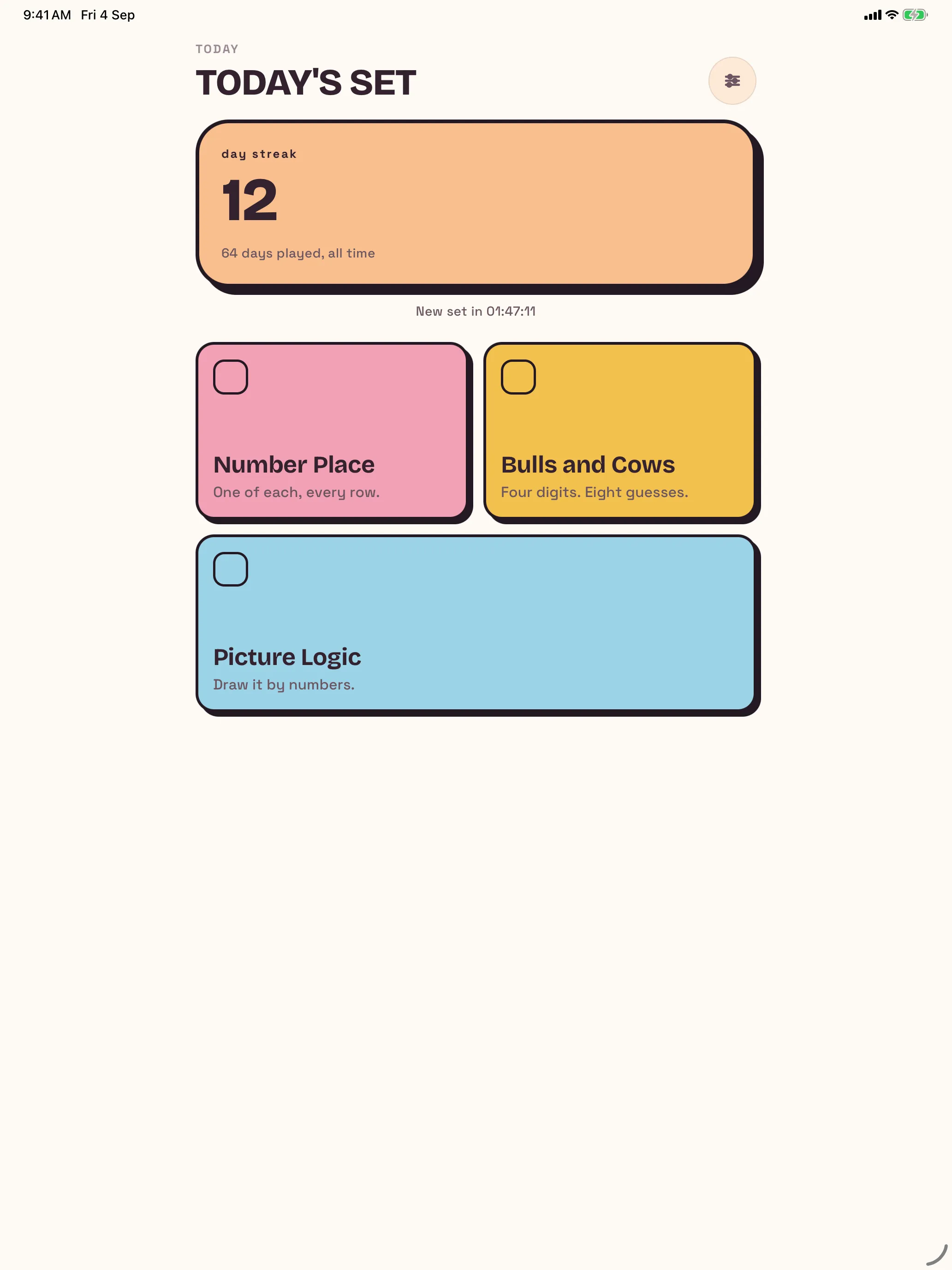
A number grid, a picture drawn from run-length clues, and a four-digit code scored in bulls and cows. Different kinds of thinking, five minutes each
New At Local Midnight
The day rolls over on your clock, not on a server's. Two people in the same city always get the same set
Every Board Is Proved Solvable
A number grid ships only once the generator has confirmed it has exactly one solution, and a picture grid ships only once a line solver has finished it without guessing. A puzzle with two answers is a puzzle that tells you you're wrong when you're right
You Never Have To Guess
Where a genre allows a board that cannot be deduced, the generator rejects it and makes another
A Streak That Forgives
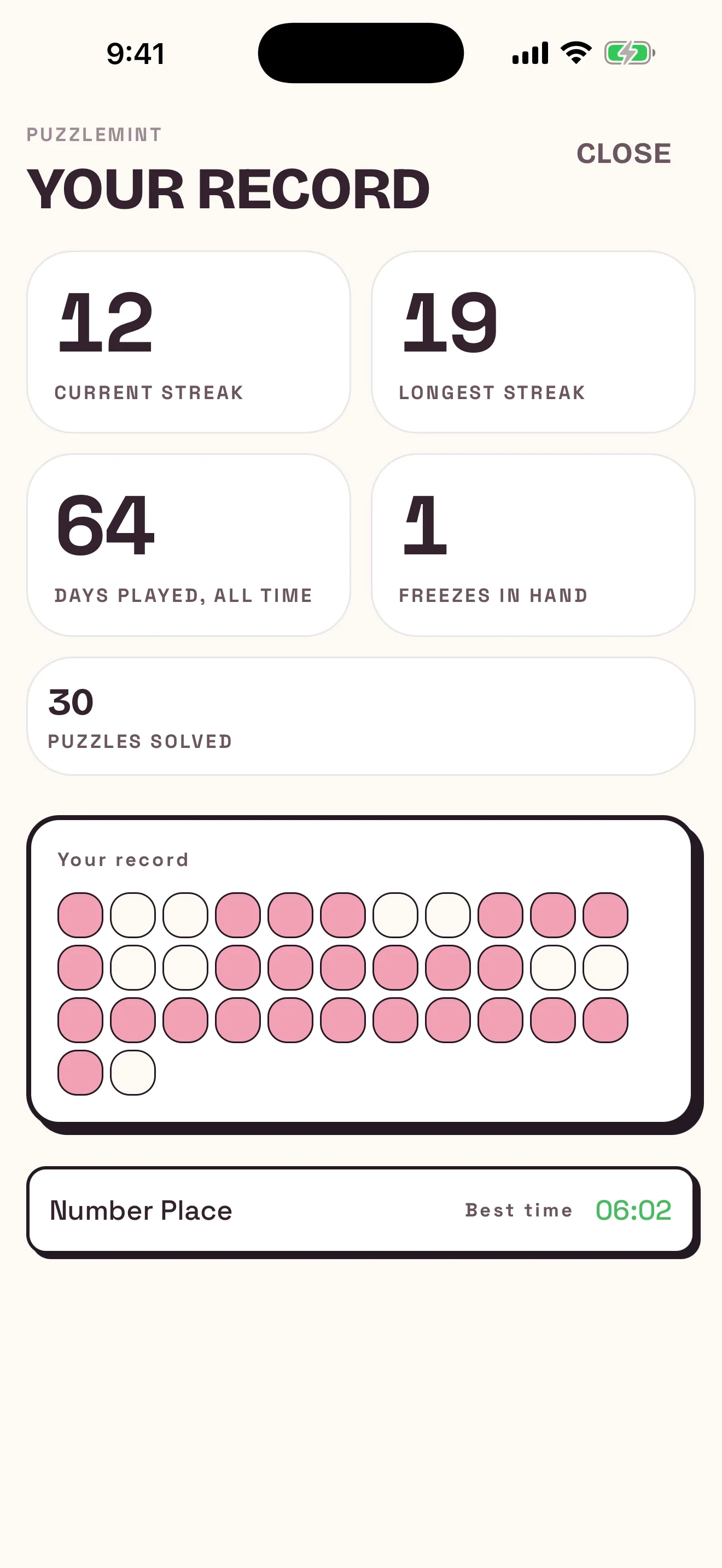
Two freezes, spent silently when you miss a day. No dialog, no guilt — you just open the app and the number is still there
A Count That Cannot Be Lost
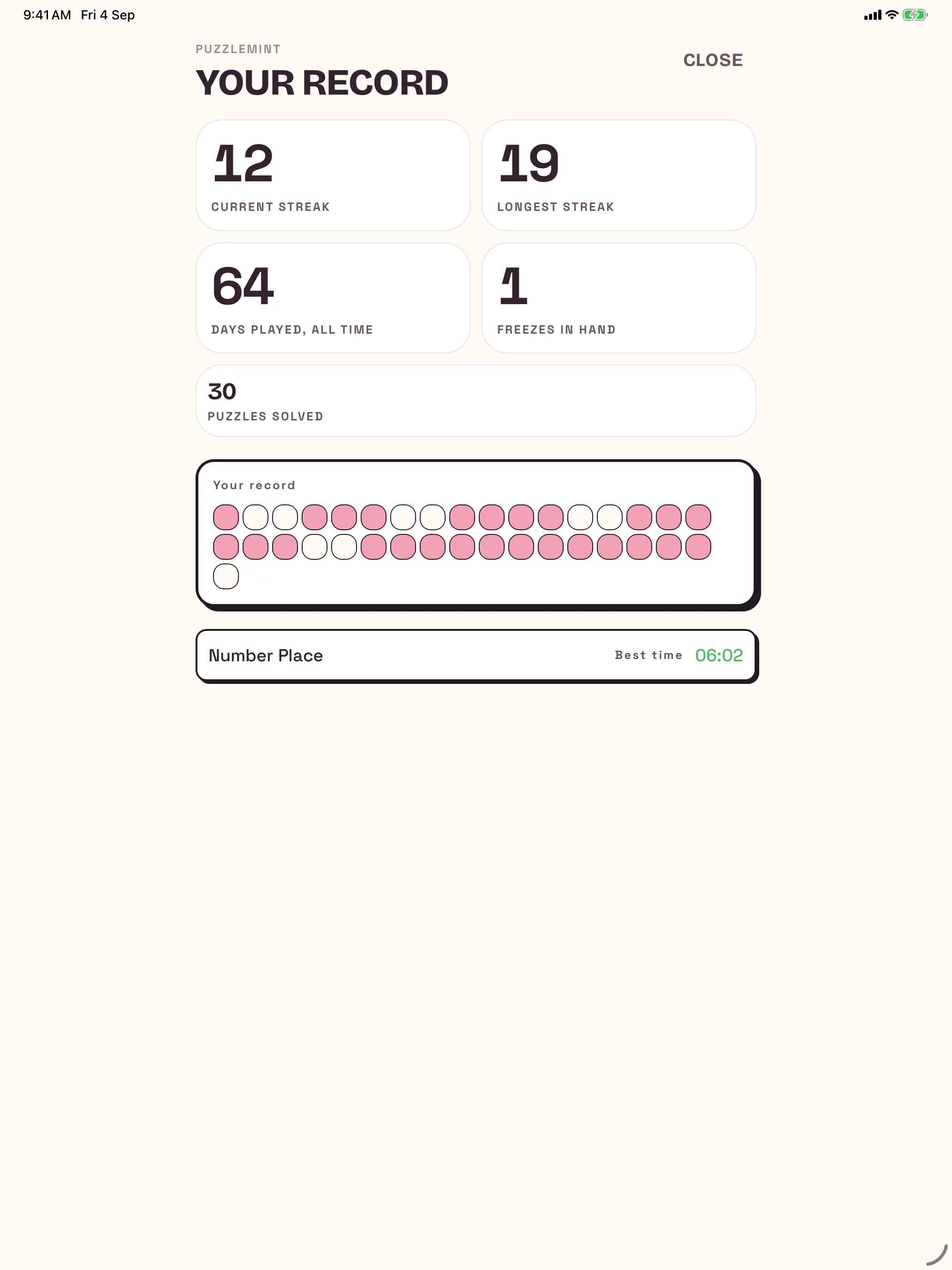
Alongside the streak, an uncapped tally of every day you ever played. Break a run and that number still says you showed up
Nothing Leaves Your Phone
The puzzles are generated on the device from the date. No account, no server, no leaderboard, nothing to download
Capturas de tela
O texto detalhado abaixo ainda não foi traduzido e é exibido em inglês.
What it does, and nothing more
Puzzlemint gives you a set of puzzles each day and keeps track of how you did. It does not claim to make you smarter, sharper, faster at your job or more resistant to anything, because nobody can honestly promise that from a phone game — and the regulators have fined companies that tried.
It is a well-made place to spend five minutes thinking. That is the whole pitch.
Three kinds of thinking
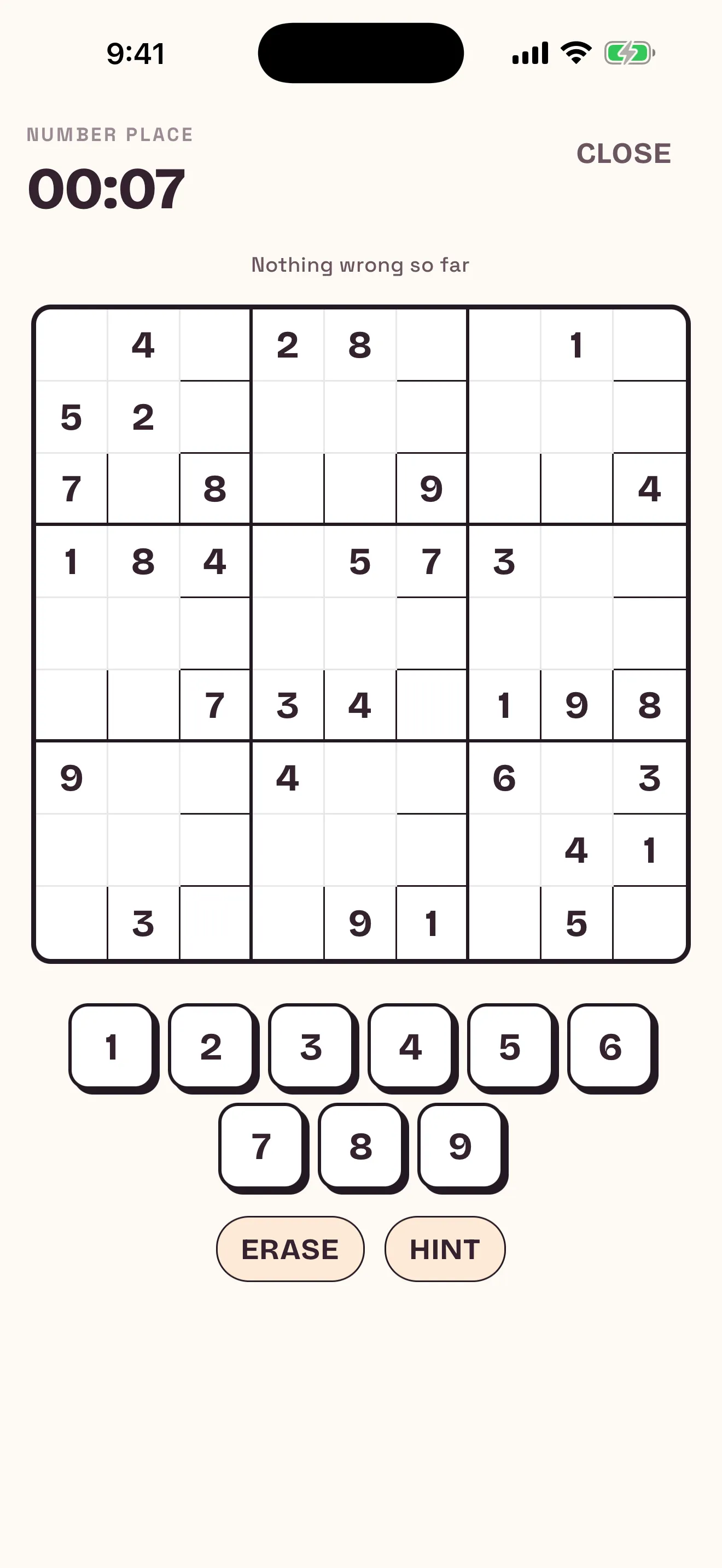
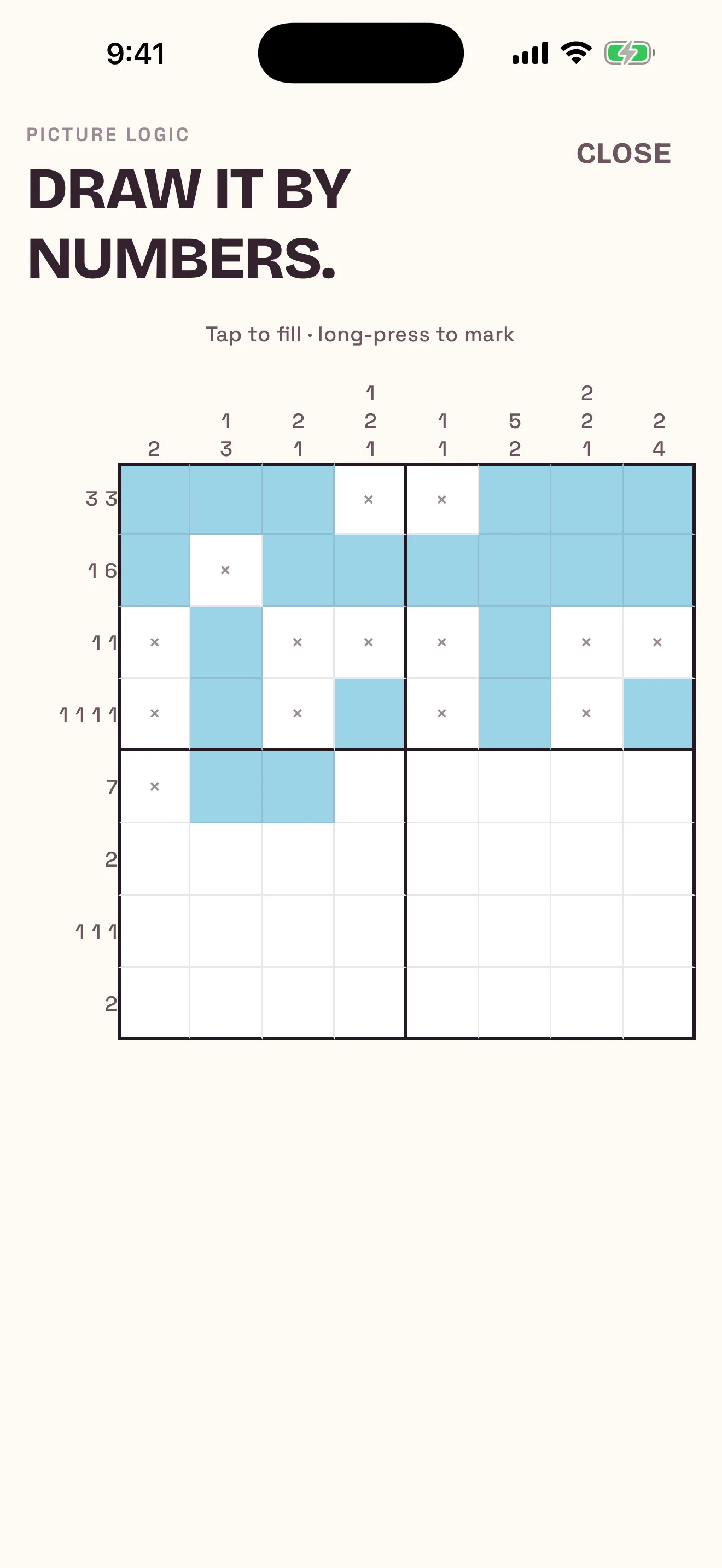
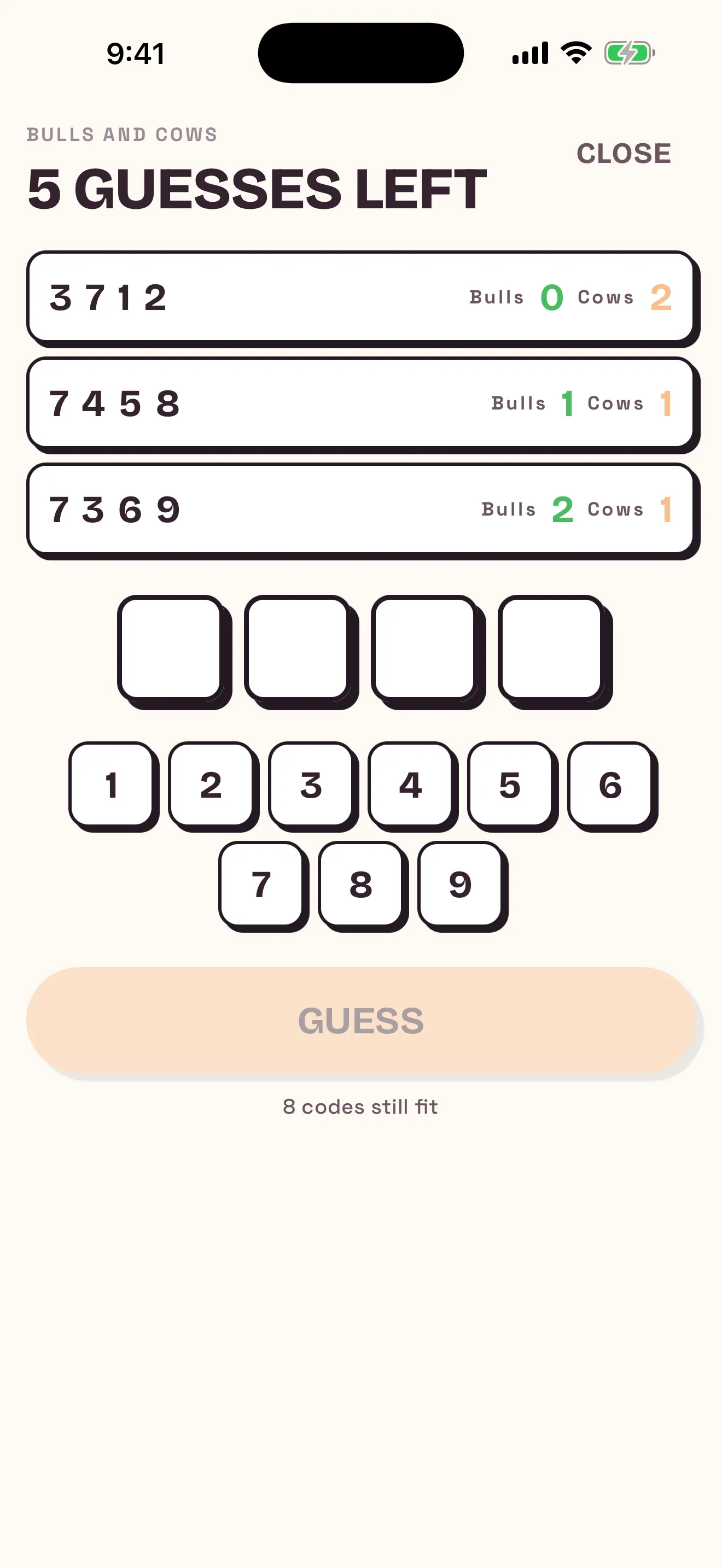
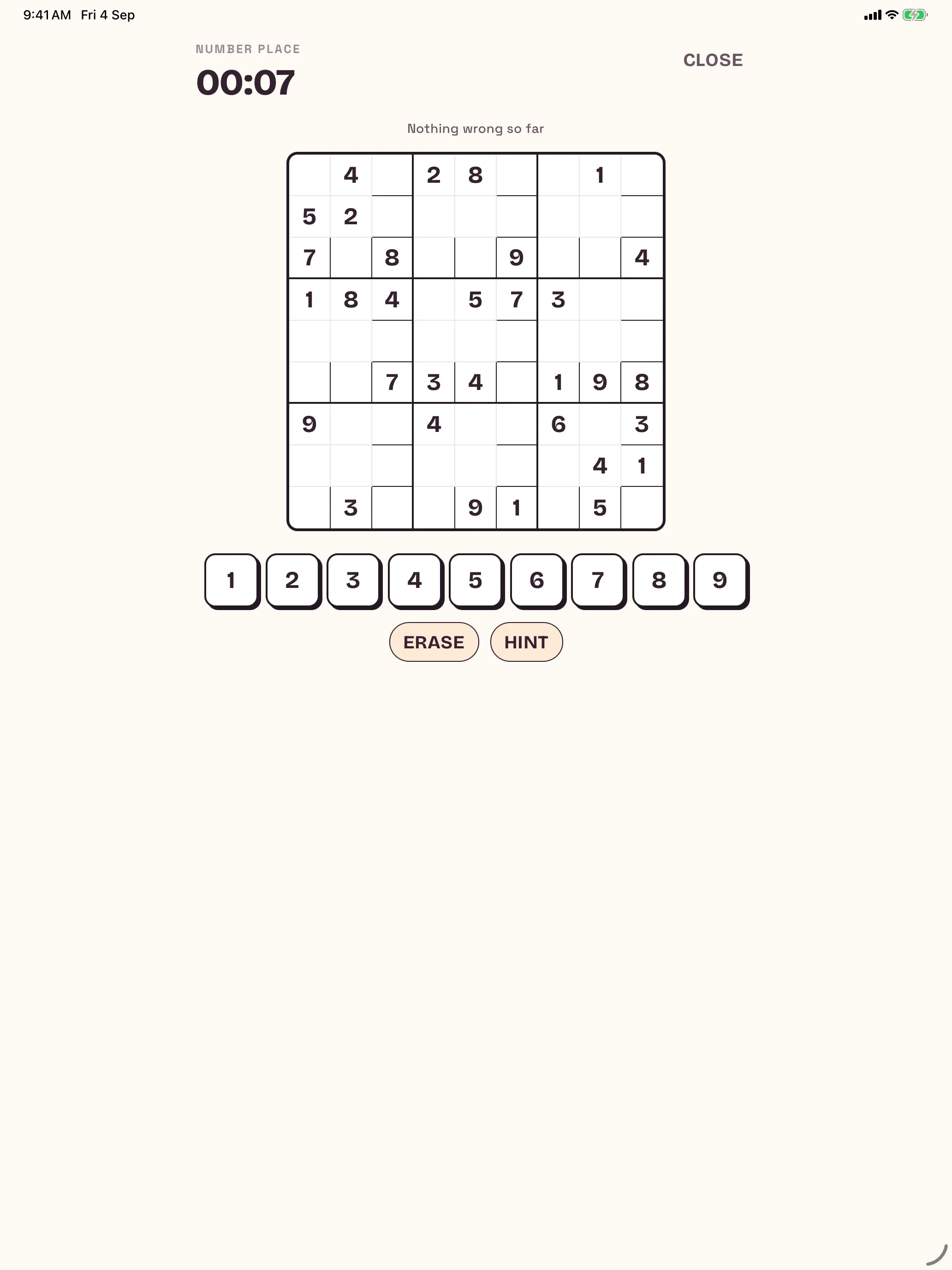
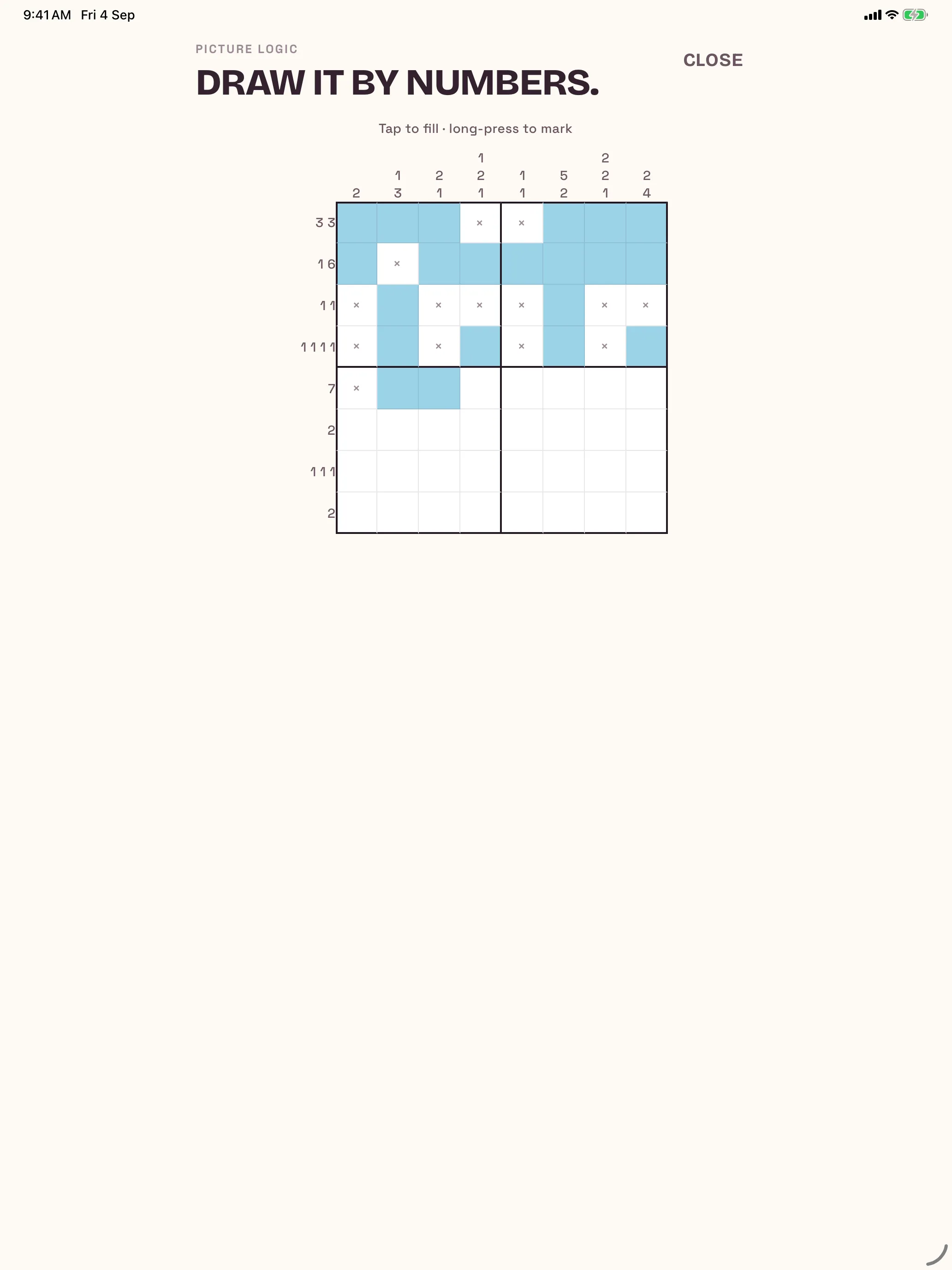
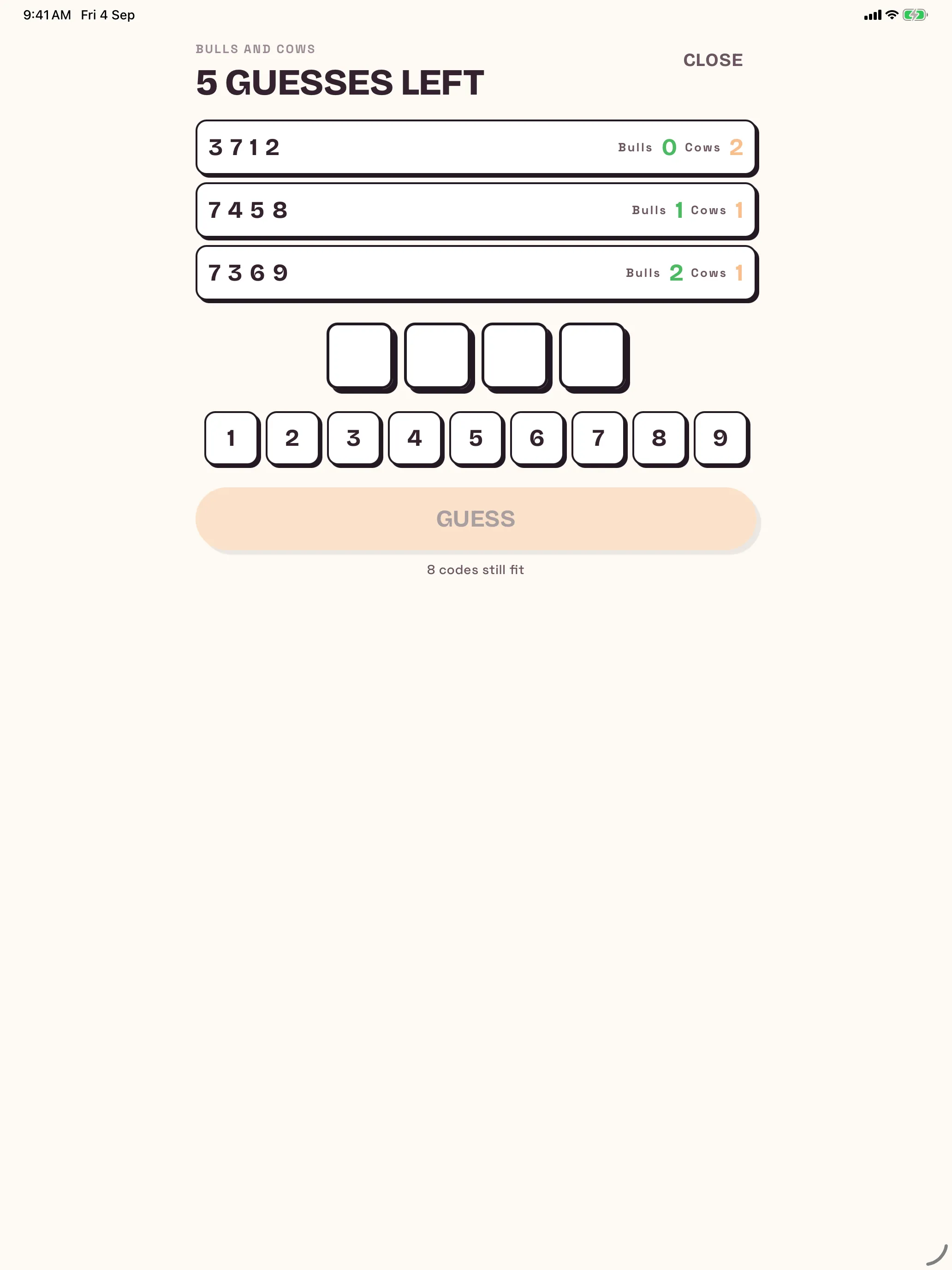
The number grid is the one you know: one of each digit in every row, column and box. The picture grid gives you run lengths down the columns and across the rows, and the picture is whatever those constraints force — you fill what must be filled and cross off what cannot. The code is four digits and eight guesses, each scored in bulls for a digit in the right place and cows for the right digit in the wrong one.
They are deliberately unalike. Five minutes on a number grid is arithmetic bookkeeping; five minutes on a picture grid is spatial; five minutes on a code is pure elimination. Doing all three is a different day than doing one of them three times.
Generated, then proved
Every number grid is built by filling a complete board, carving clues out of it, and checking after each removal that exactly one solution still exists. If a removal would allow two, it is put back.
Picture grids get their uniqueness a different way, and get it for free. The generator draws a random bitmap, derives the clues from it, throws the bitmap away, and then hands the clues to a line solver that is only allowed to make deductions that are certain. If the solver finishes, the puzzle has exactly one solution and can be reached without guessing — those are the same statement. If it stalls, the board is discarded and another is drawn.
That is slower than emitting a pattern and hoping, and it is the difference between a puzzle and a rumour. A grid with two solutions produces a player who fills it in correctly and is told they are wrong.
The streak forgives, quietly
Streaks are the strongest reason people come back, and also the most common reason they stop: a broken run leaves people playing less than before they had one, and the longer the run, the worse the fall.
So Puzzlemint earns you freezes as you play and spends them automatically when you miss a day. There is no dialog and no warning — you simply open the app and the number is still where you left it. And underneath the streak sits a second count of every day you have ever played, which nothing can take away.
Where the ads are, and are not
Puzzlemint is free and carries ads. They appear on the home grid, on the results screen and in settings. They never appear on a board you are solving.