
Puzzlemint: Daily Puzzles
Tres puzles cada mañana. Cinco minutos tranquilos.
- IOS
- ANDROID
- Entretenimiento
- Próximamente
Sobre Puzzlemint
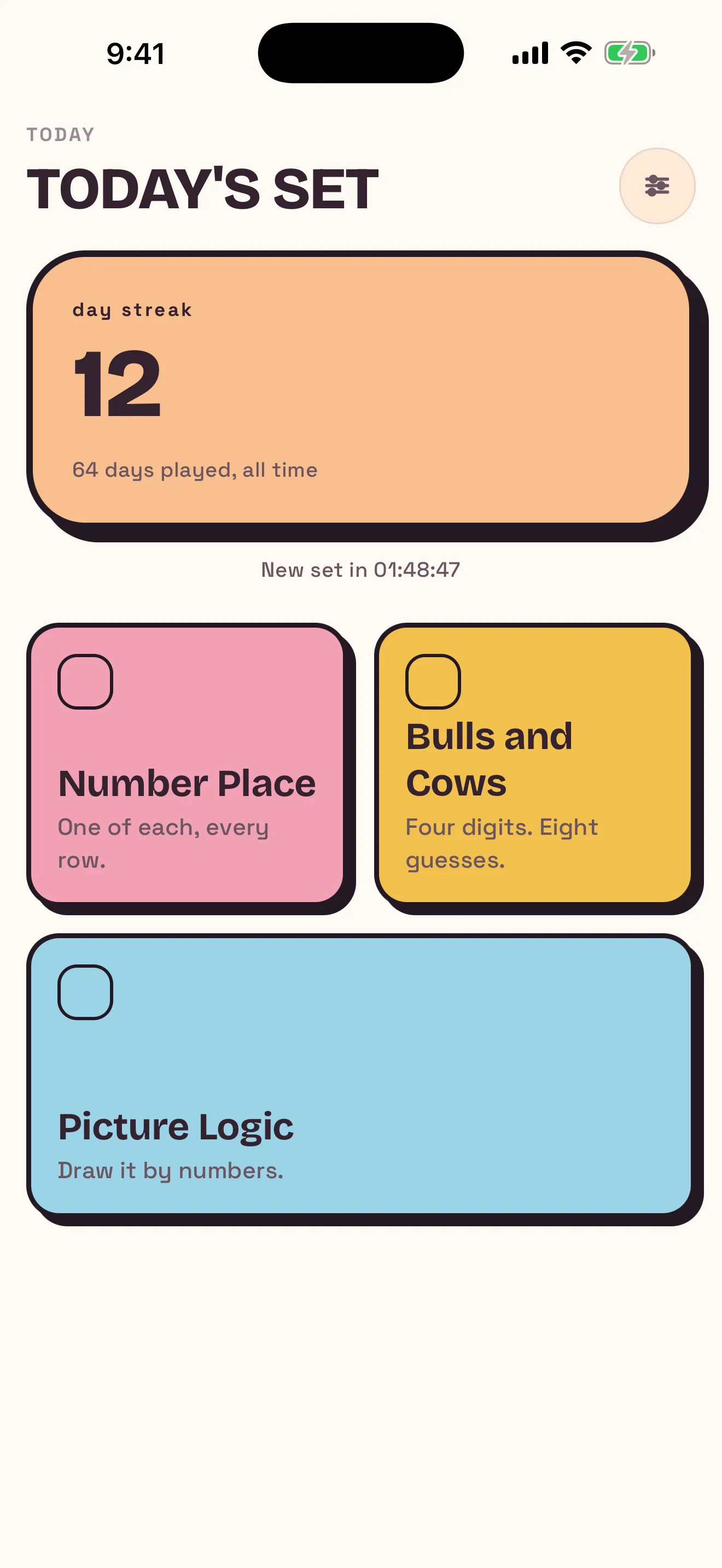
Tres puzles al día — una cuadrícula numérica, un dibujo que sale de sus propias pistas y un código de cuatro dígitos por descifrar — nuevos a la medianoche estés donde estés. Cada tablero se genera y se demuestra resoluble antes de publicarse: las cuadrículas numéricas tienen exactamente una solución, las de dibujo se terminan solo por deducción y nunca te piden adivinar. Arma una racha, mejora tu propio tiempo y mantén la seguidilla incluso el día en que la vida se atraviesa. Sin cuenta, sin inicio de sesión, funciona en un avión.
Características
Tres juegos, no uno
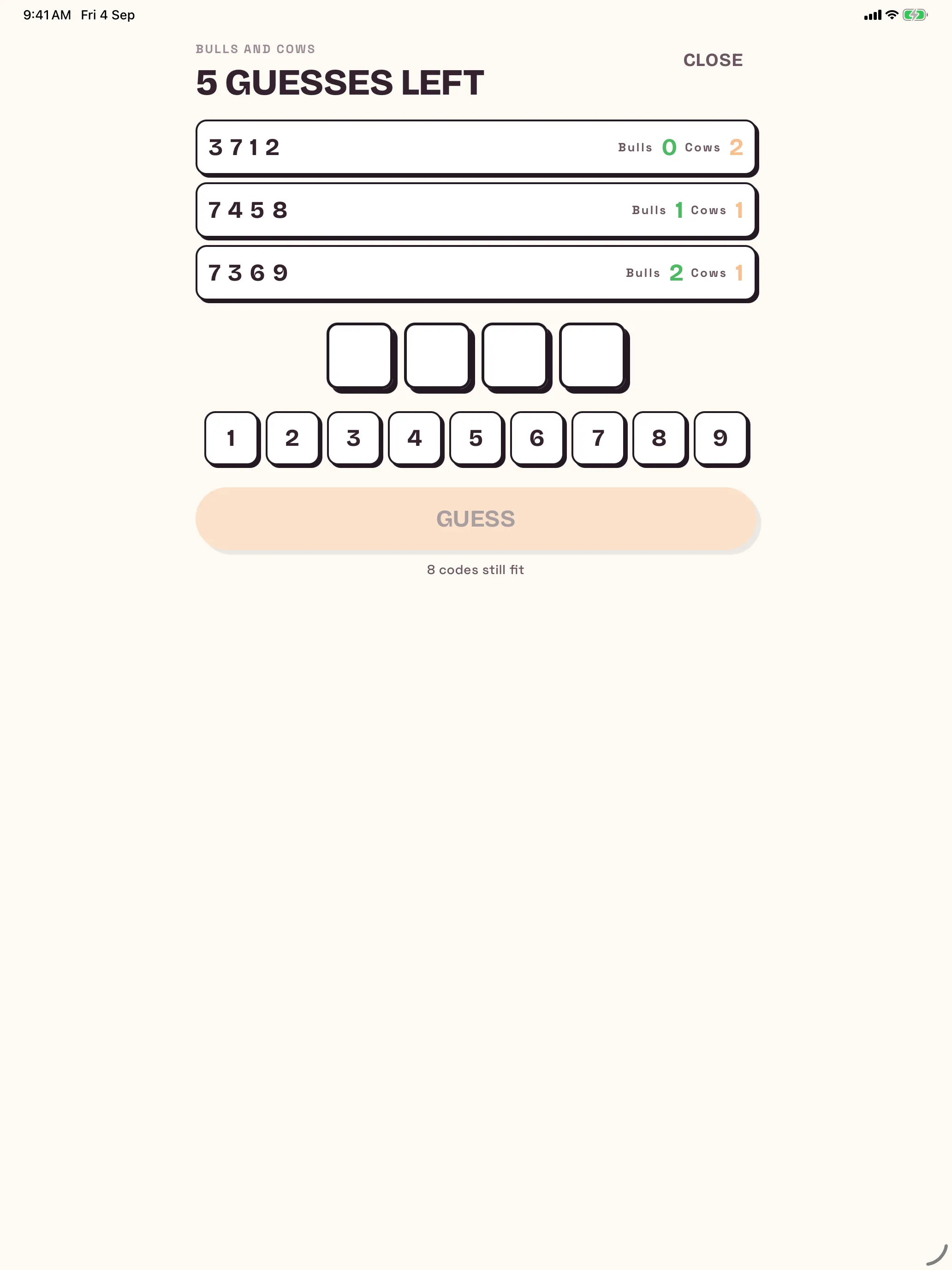
Una cuadrícula numérica, un dibujo que sale de pistas de tramos y un código de cuatro dígitos que se puntúa con toros y vacas. Formas distintas de pensar, cinco minutos cada una
Nuevo a tu medianoche
El día cambia en tu reloj, no en el de un servidor. Dos personas en la misma ciudad siempre reciben el mismo conjunto
Cada tablero se demuestra resoluble
Una cuadrícula numérica solo se publica cuando el generador confirma que tiene exactamente una solución, y una cuadrícula de dibujo solo cuando un solucionador de líneas la termina sin adivinar. Un puzle con dos respuestas es un puzle que te dice que te equivocas cuando aciertas
Nunca tienes que adivinar
Cuando un género admite un tablero que no se puede deducir, el generador lo rechaza y crea otro
Una racha que perdona
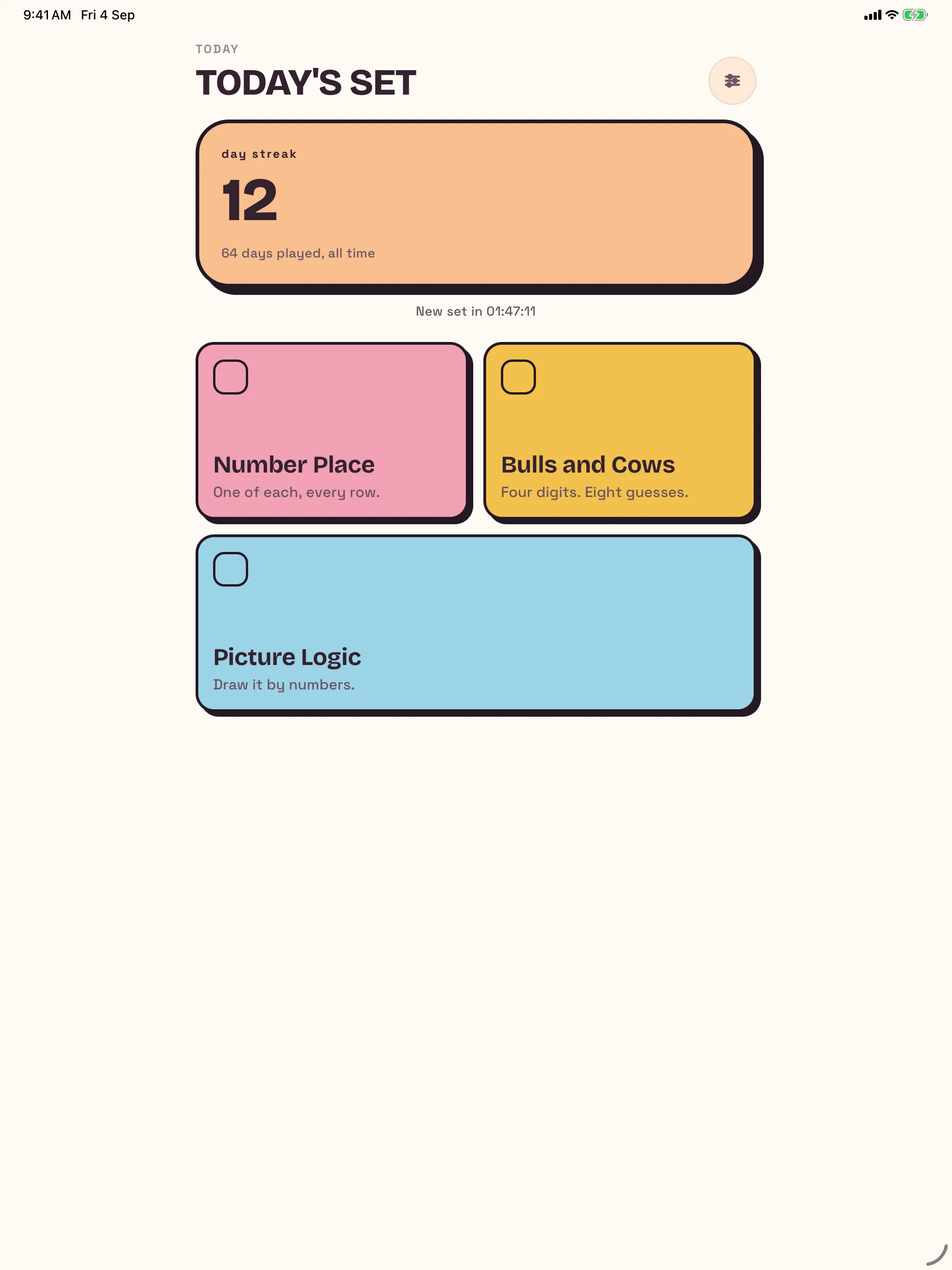
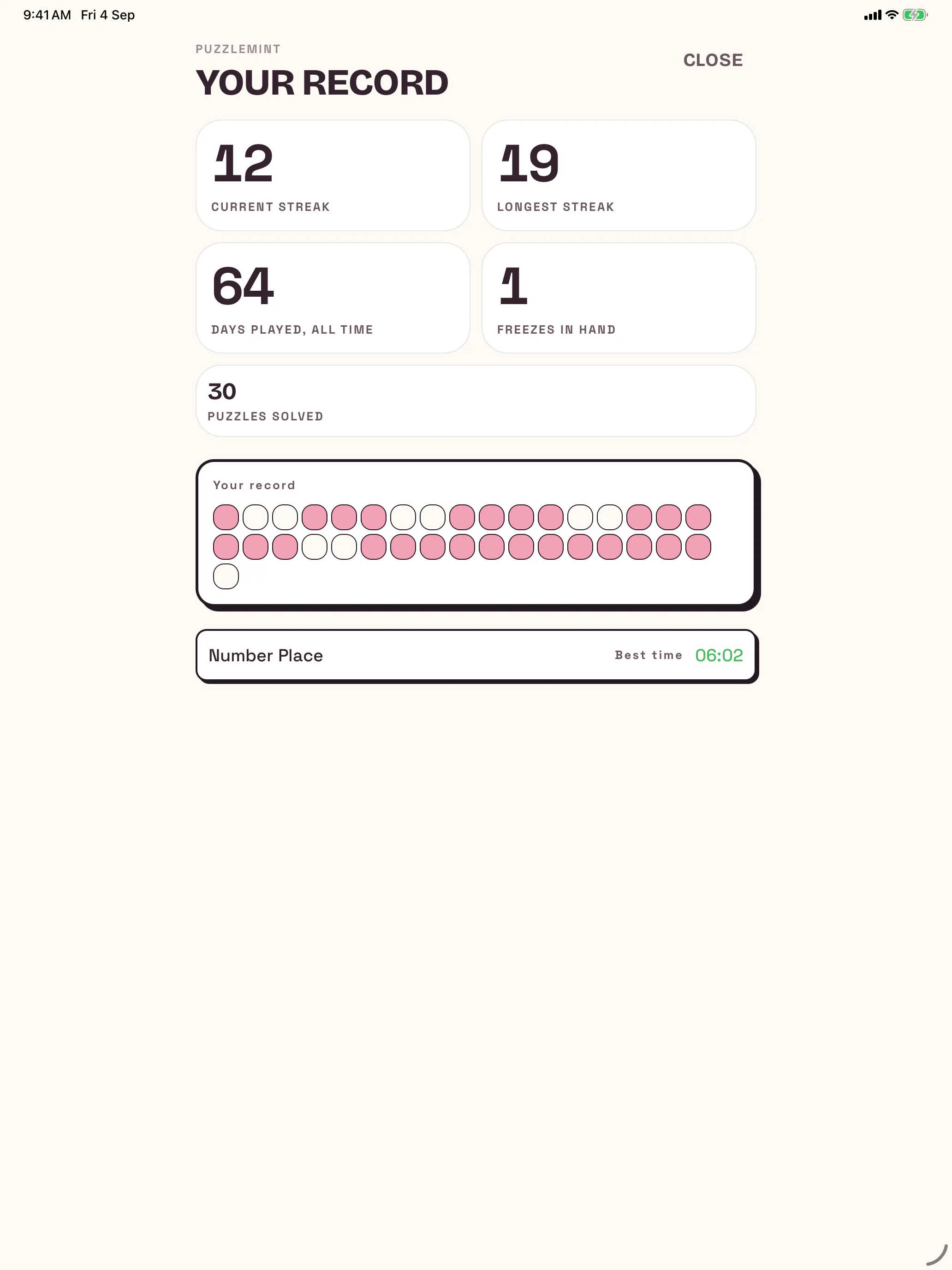
Dos congeladores que se gastan en silencio cuando te saltas un día. Sin avisos, sin culpa: abres la app y el número sigue ahí
Una cuenta que no se pierde
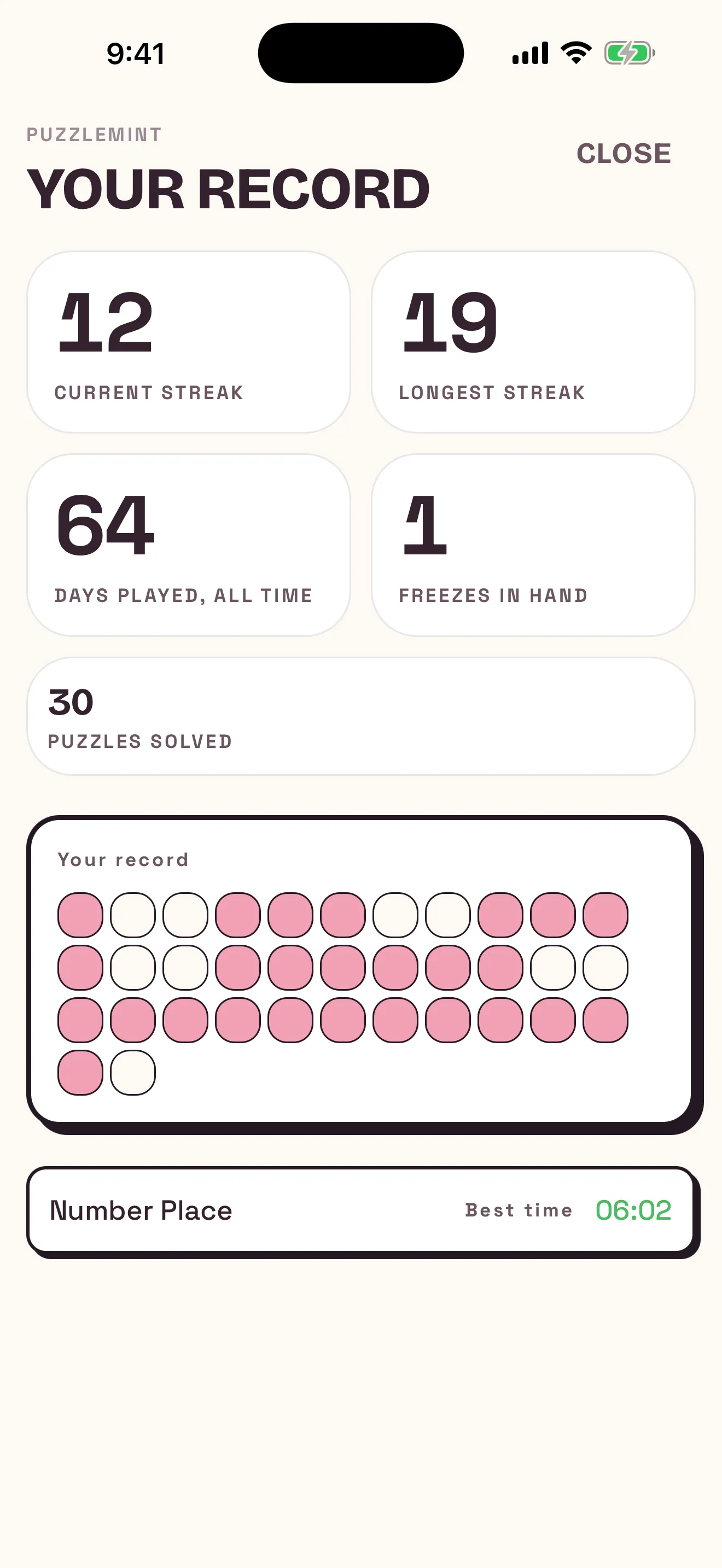
Junto a la racha, un total sin tope de todos los días que has jugado. Rompe una racha y ese número sigue diciendo que estuviste ahí
Nada sale de tu teléfono
Los puzles se generan en el dispositivo a partir de la fecha. Sin cuenta, sin servidor, sin clasificación, nada que descargar
Capturas
El texto detallado que sigue aún no está traducido y se muestra en inglés.
What it does, and nothing more
Puzzlemint gives you a set of puzzles each day and keeps track of how you did. It does not claim to make you smarter, sharper, faster at your job or more resistant to anything, because nobody can honestly promise that from a phone game — and the regulators have fined companies that tried.
It is a well-made place to spend five minutes thinking. That is the whole pitch.
Three kinds of thinking
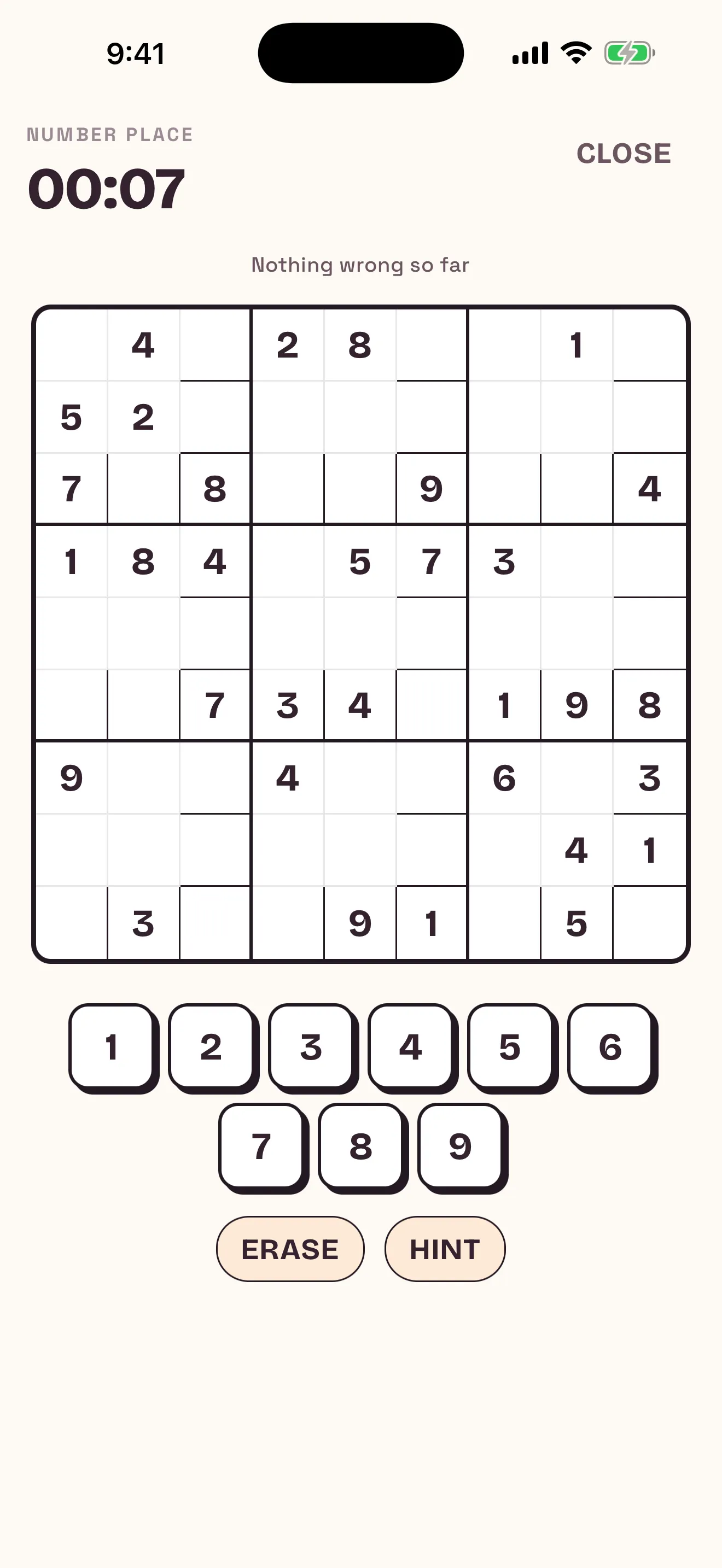
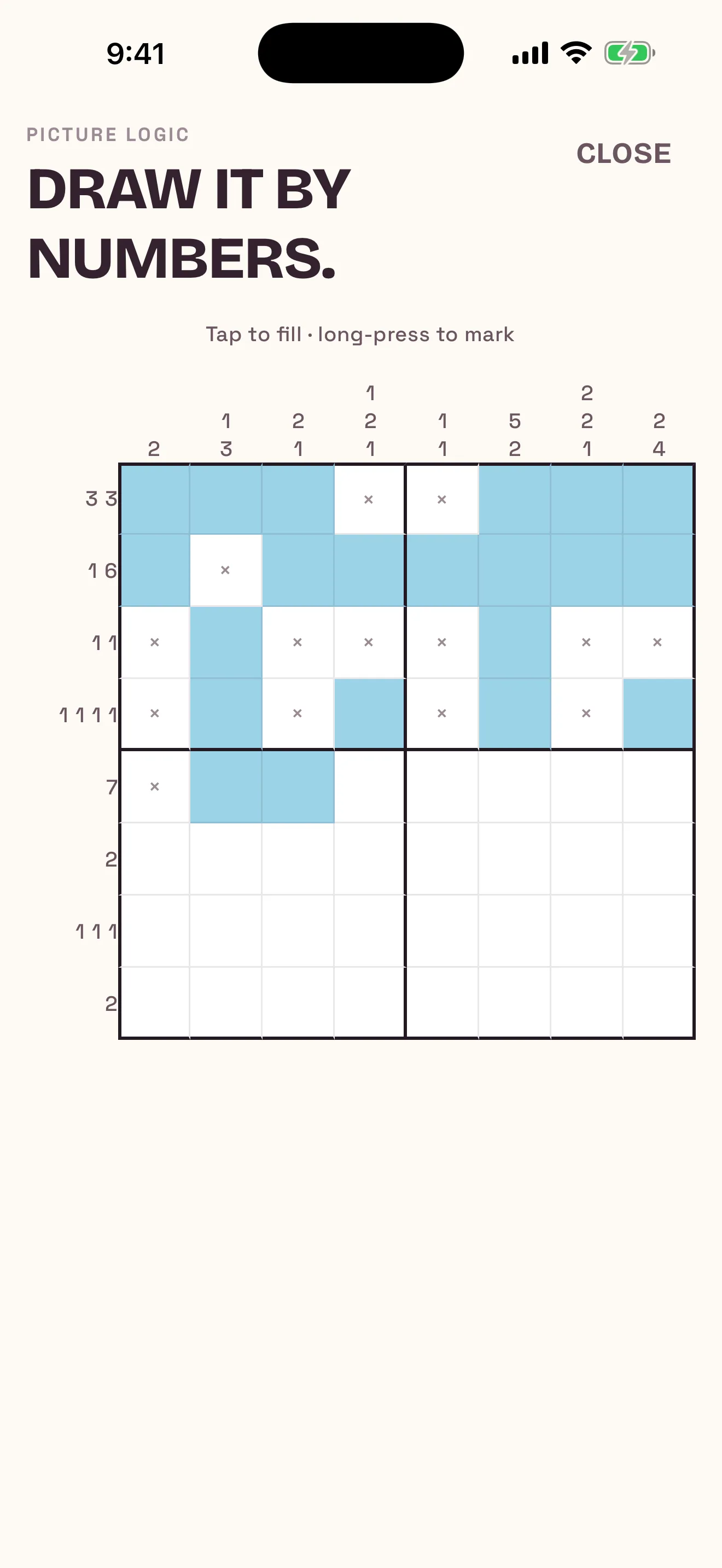
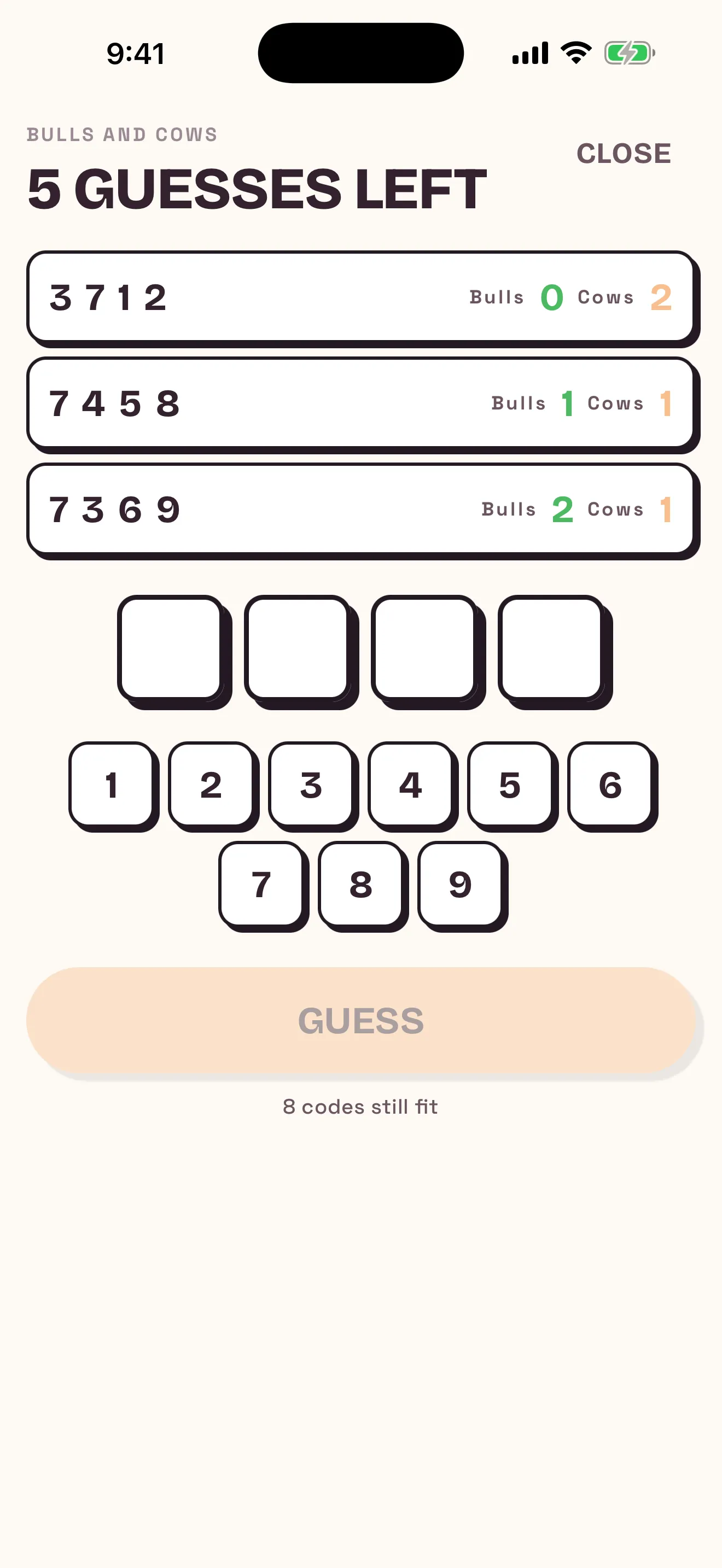
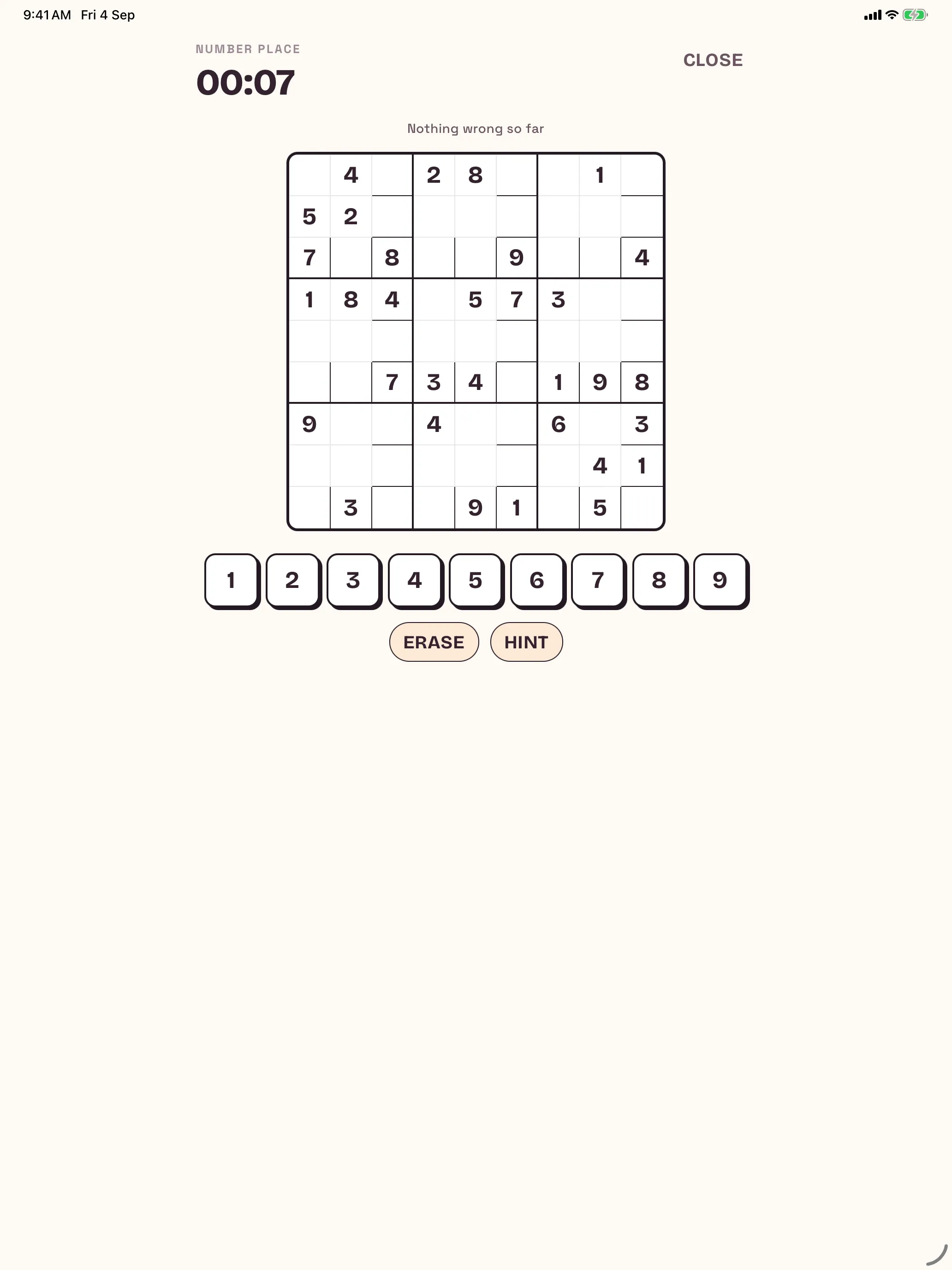
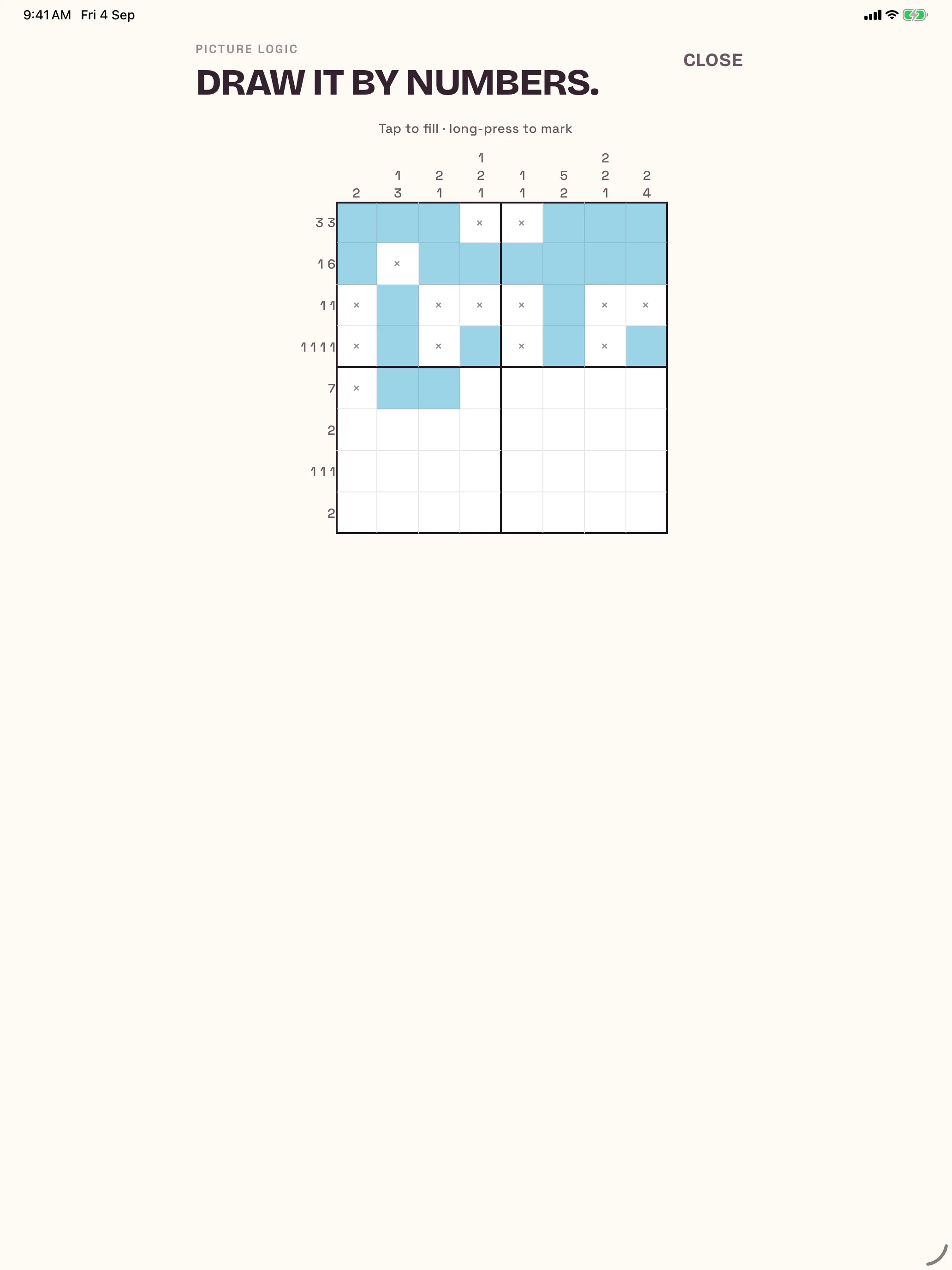
The number grid is the one you know: one of each digit in every row, column and box. The picture grid gives you run lengths down the columns and across the rows, and the picture is whatever those constraints force — you fill what must be filled and cross off what cannot. The code is four digits and eight guesses, each scored in bulls for a digit in the right place and cows for the right digit in the wrong one.
They are deliberately unalike. Five minutes on a number grid is arithmetic bookkeeping; five minutes on a picture grid is spatial; five minutes on a code is pure elimination. Doing all three is a different day than doing one of them three times.
Generated, then proved
Every number grid is built by filling a complete board, carving clues out of it, and checking after each removal that exactly one solution still exists. If a removal would allow two, it is put back.
Picture grids get their uniqueness a different way, and get it for free. The generator draws a random bitmap, derives the clues from it, throws the bitmap away, and then hands the clues to a line solver that is only allowed to make deductions that are certain. If the solver finishes, the puzzle has exactly one solution and can be reached without guessing — those are the same statement. If it stalls, the board is discarded and another is drawn.
That is slower than emitting a pattern and hoping, and it is the difference between a puzzle and a rumour. A grid with two solutions produces a player who fills it in correctly and is told they are wrong.
The streak forgives, quietly
Streaks are the strongest reason people come back, and also the most common reason they stop: a broken run leaves people playing less than before they had one, and the longer the run, the worse the fall.
So Puzzlemint earns you freezes as you play and spends them automatically when you miss a day. There is no dialog and no warning — you simply open the app and the number is still where you left it. And underneath the streak sits a second count of every day you have ever played, which nothing can take away.
Where the ads are, and are not
Puzzlemint is free and carries ads. They appear on the home grid, on the results screen and in settings. They never appear on a board you are solving.
Más apps como Puzzlemint
-

Color Streak: Shade Match Game
Elige el tono exacto mientras los colores se acercan. ¿Cuántos seguidos puedes acertar?
-

Five Facts: Daily Trivia Quiz
Cinco datos al día, uno es falso. Descúbrelo, mantén la racha, gana insignias.
-

Saymoji: Guess the Emoji Quiz
Acertijos diarios de emojis en inglés y español, con racha y mascota.
-

Datefall: Daily History Puzzle
Ordena cinco hechos históricos: la historia te juzgará.