
Statblock: Weekly Review
Votre semaine, comme une fiche de personnage.
- IOS
- ANDROID
- Productivité
- Bientôt disponible
À propos de Statblock
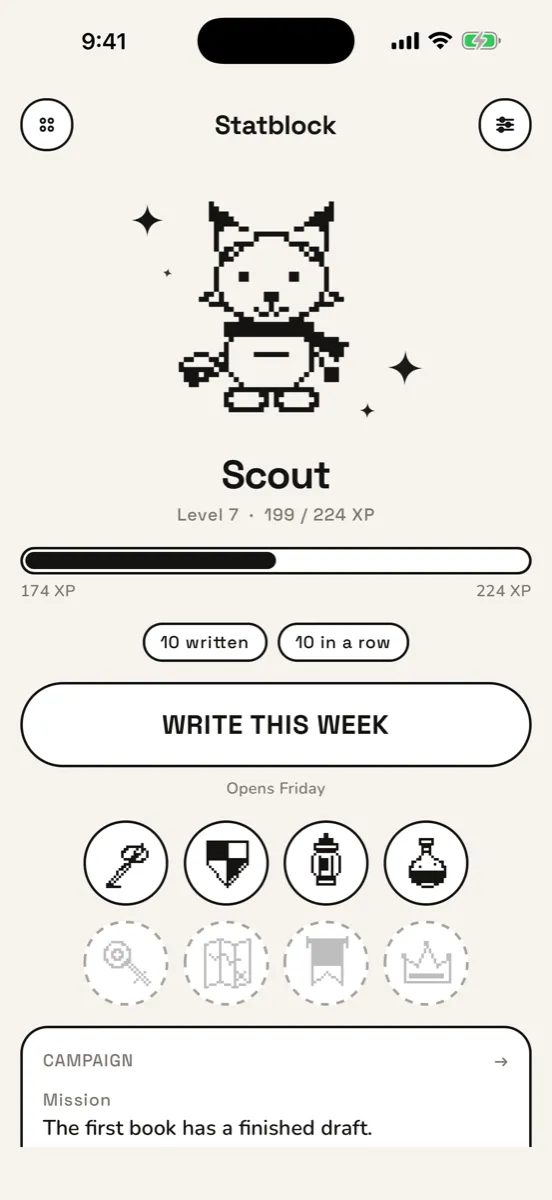
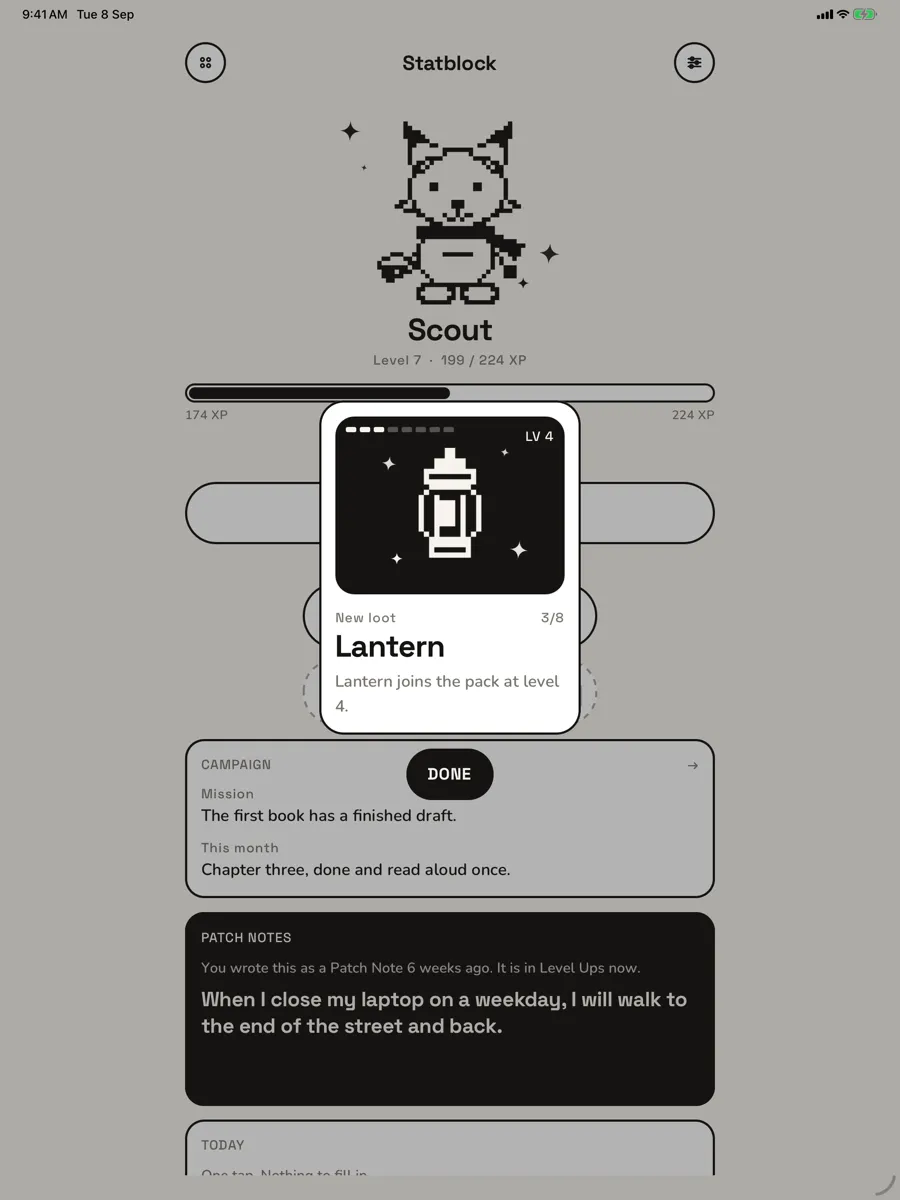
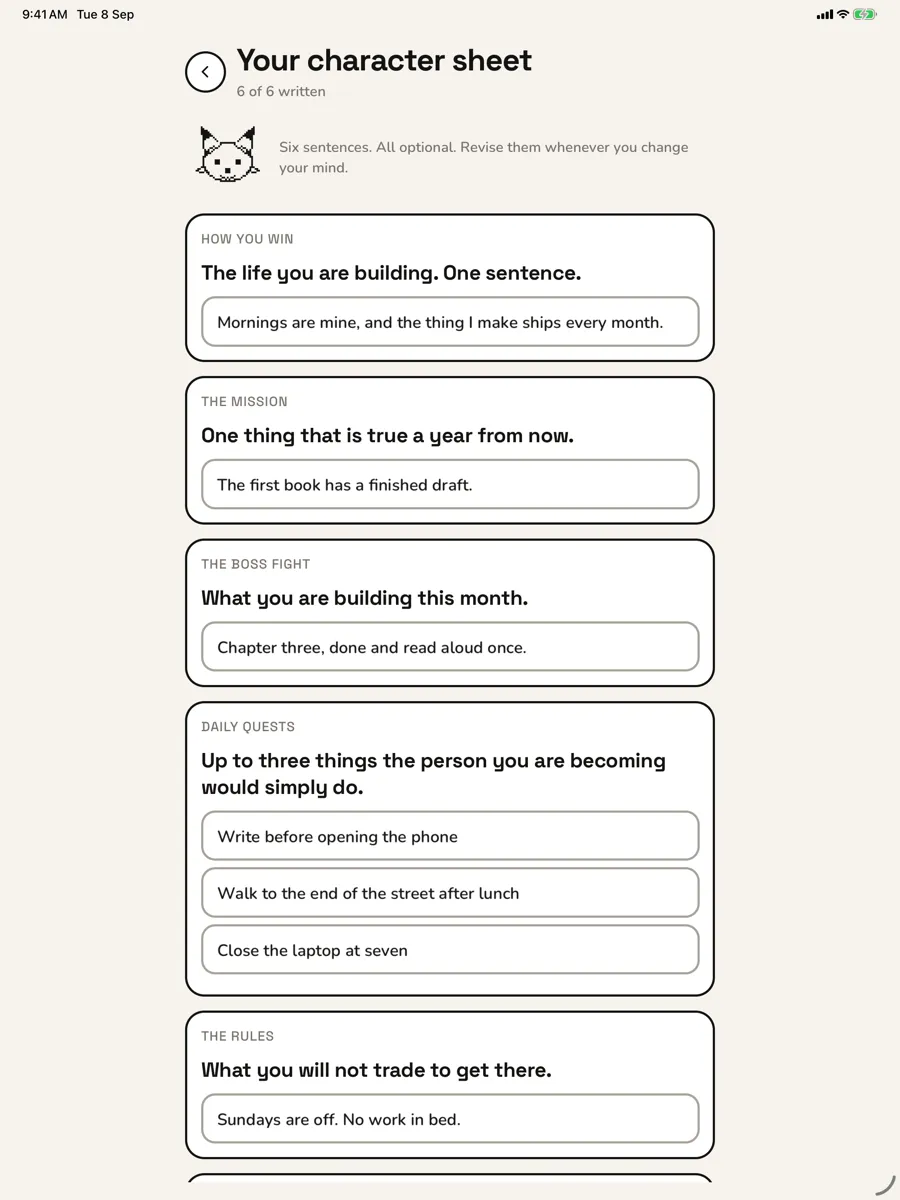
Dessiné à l'encre sur papier, avec un renard en 1 bit. Trois questions, une fois par semaine. Ce qui s'est bien passé, ce que vous avez amélioré, et une chose précise à essayer la semaine suivante — avec le moment où vous l'essaierez. Ensuite, l'app garde chaque semaine que vous écrivez et vous la relit : quand une chose écrite comme Note de patch en mars réapparaît comme Montée de niveau en juin, elle vous le dit et vous montre la semaine pour que vous puissiez vérifier. Le niveau compte le fait d'avoir écrit, jamais ce que vous avez écrit. La partie ne peut pas être perdue. Sans compte, sans serveur, rien ne quitte votre téléphone. Huit objets de butin arrivent avec le niveau, et une fiche de Campagne facultative de six phrases (comment vous gagnez, la mission, le boss du mois, trois quêtes, les règles) se trouve derrière les trois questions de la semaine.
Fonctionnalités
Trois questions, une fois par semaine
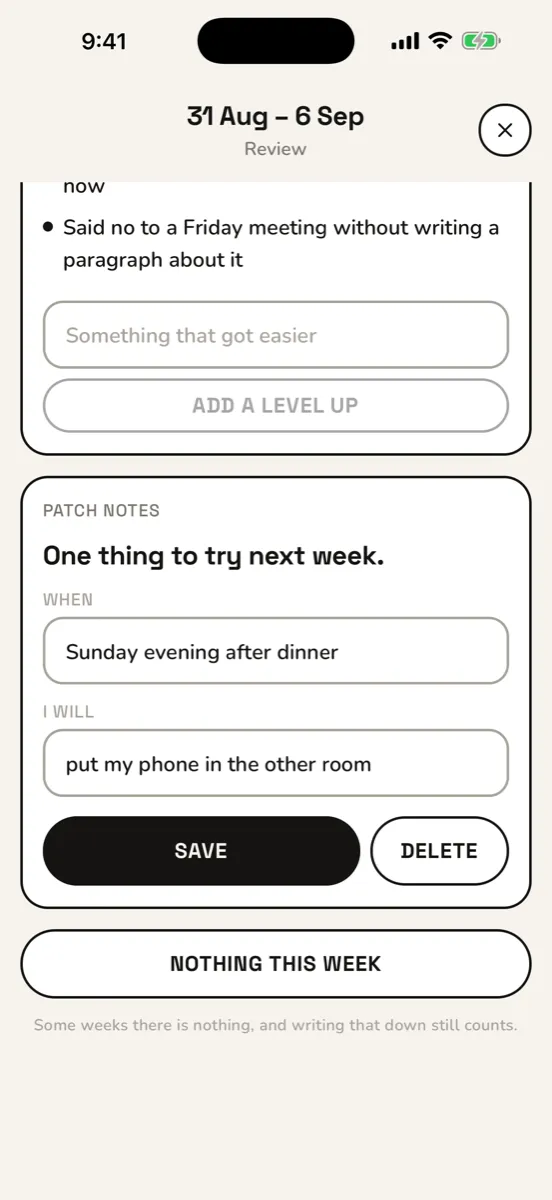
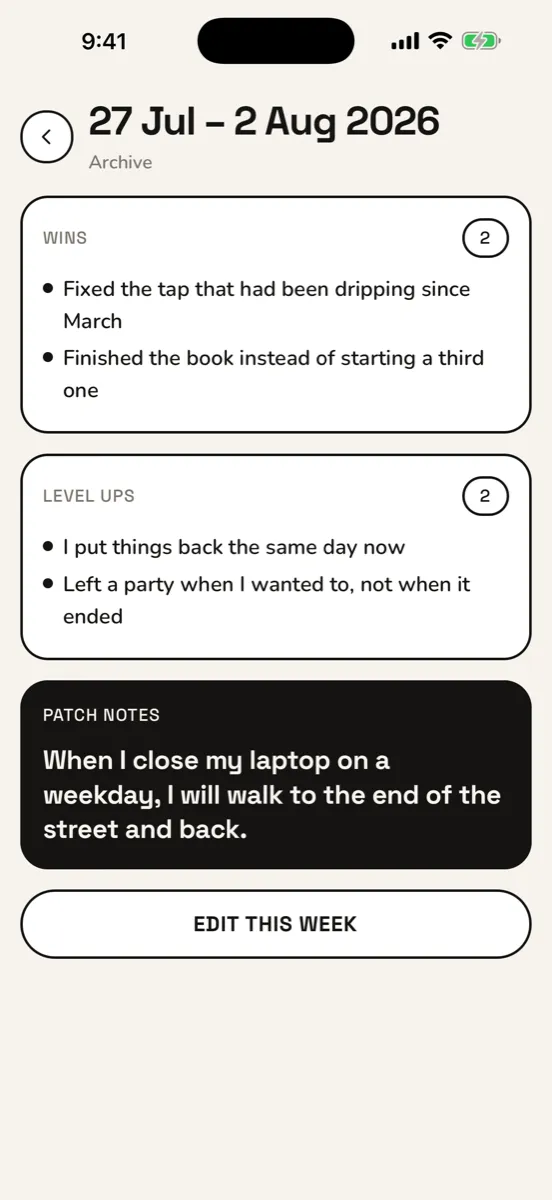
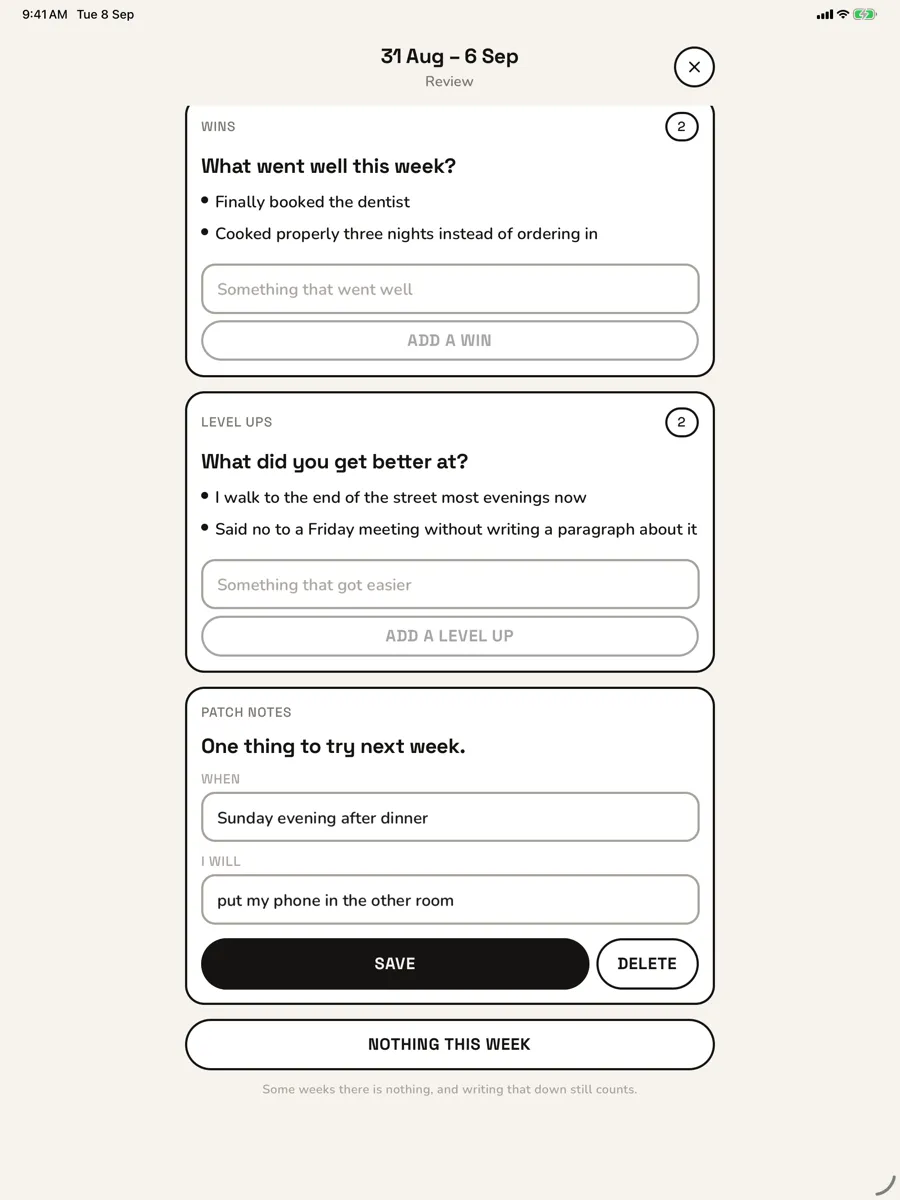
Victoires, Montées de niveau et une Note de patch. Du vendredi au lundi, quand vous voulez. Cinq minutes, et rien à remplir le reste de la semaine
Le plan a deux moitiés
Un quand et un alors, dans des champs séparés. « Quand mon réveil sonne, je mets mes chaussures » — pas « être plus discipliné ». Un plan que vous croiserez vaut mieux qu'un plan plein de bonnes intentions
Du butin, gagné en étant là
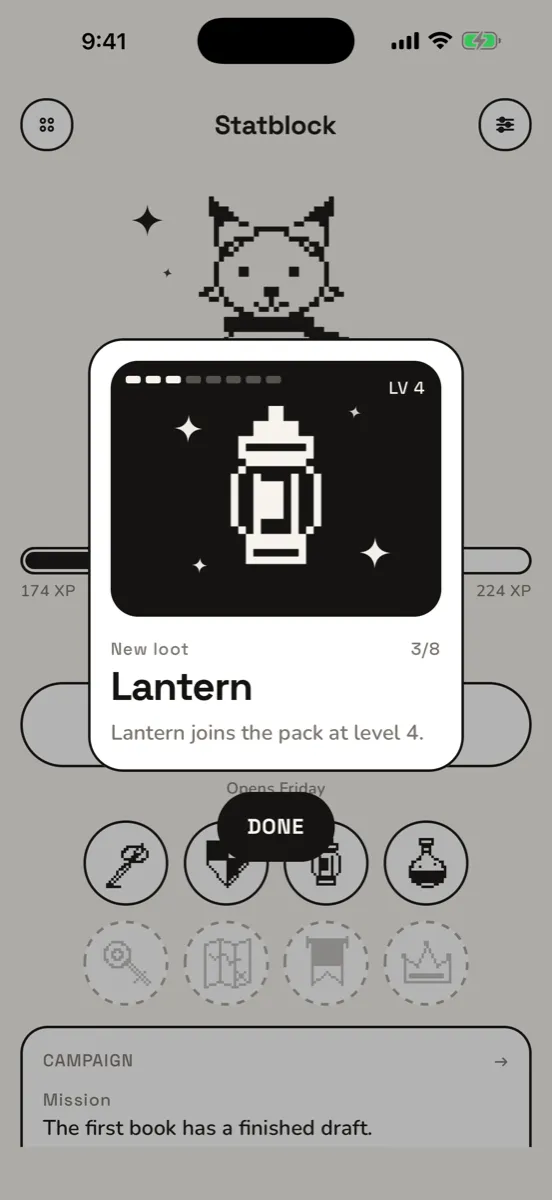
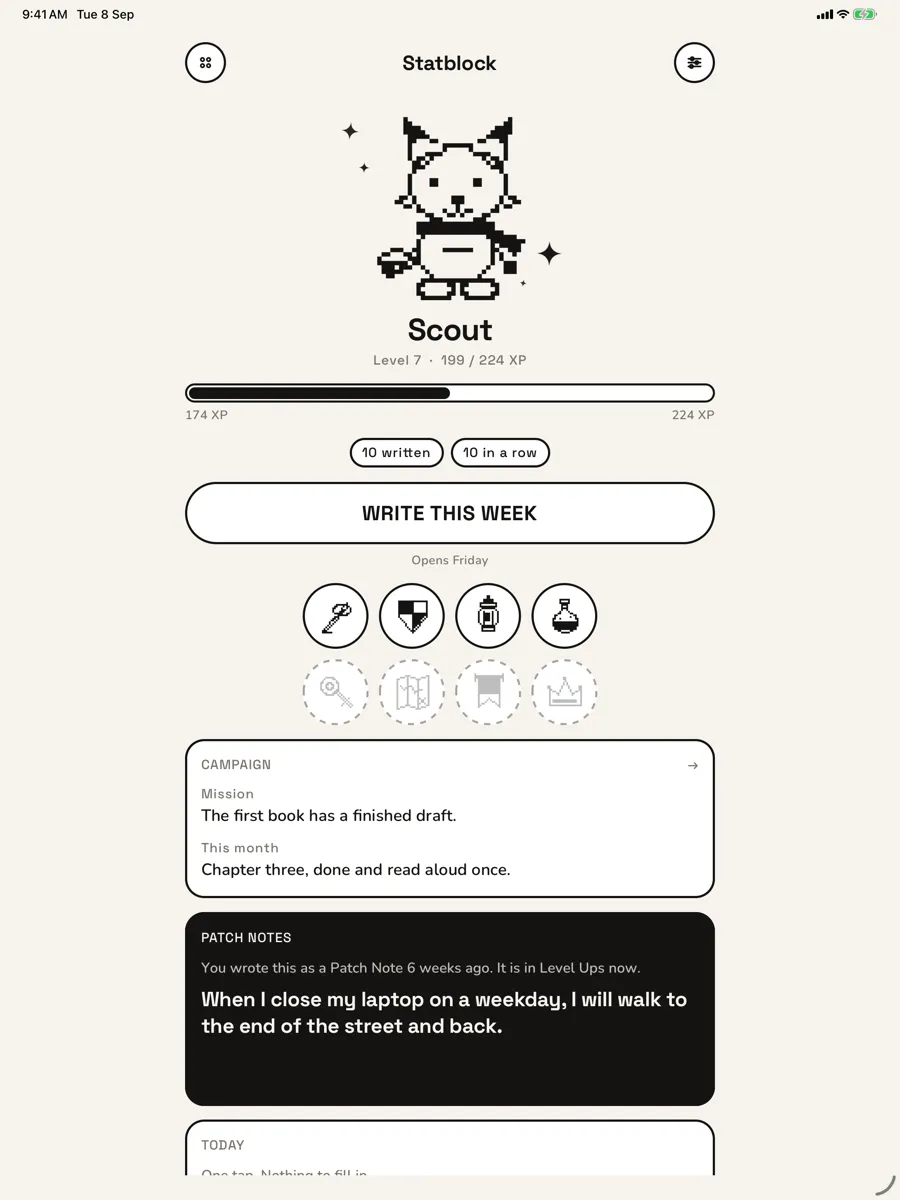
Une plume, un bouclier, une lanterne, une clé : huit objets arrivent aux niveaux 1, 2, 4, 6 et ainsi de suite. Le niveau ne compte que les semaines écrites, donc chaque objet s'obtient en écrivant « rien cette semaine » chaque semaine
Une fiche de personnage, si vous voulez
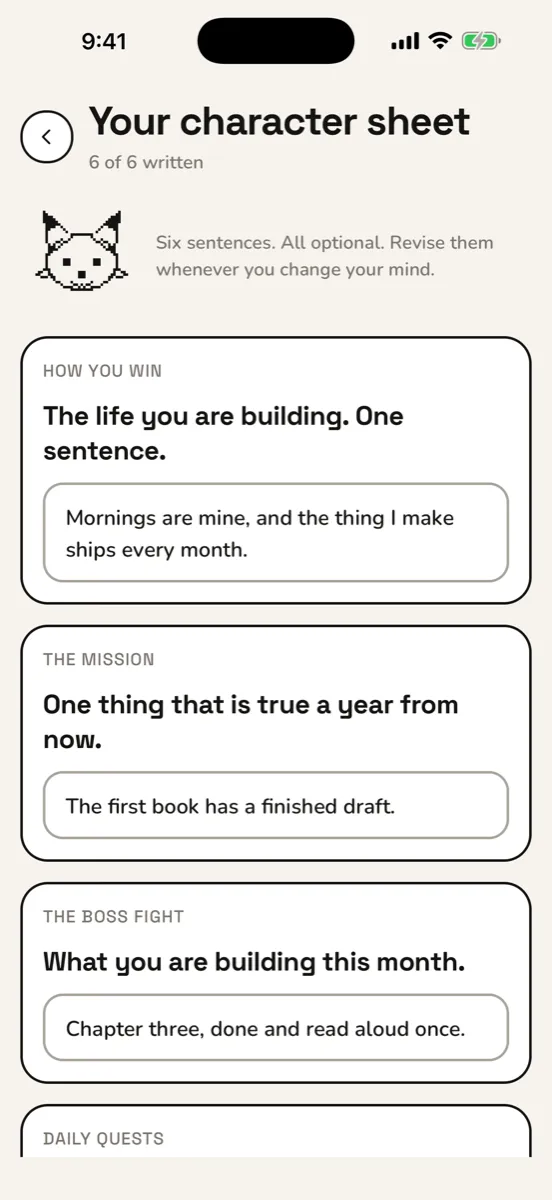
Six phrases facultatives derrière la semaine : comment vous gagnez, une chose vraie dans un an, le combat de boss du mois, jusqu'à trois quêtes quotidiennes, les règles que vous ne négocierez pas, et un mardi ordinaire dans cinq ans. Rien n'y est noté
L'archive, c'est l'essentiel
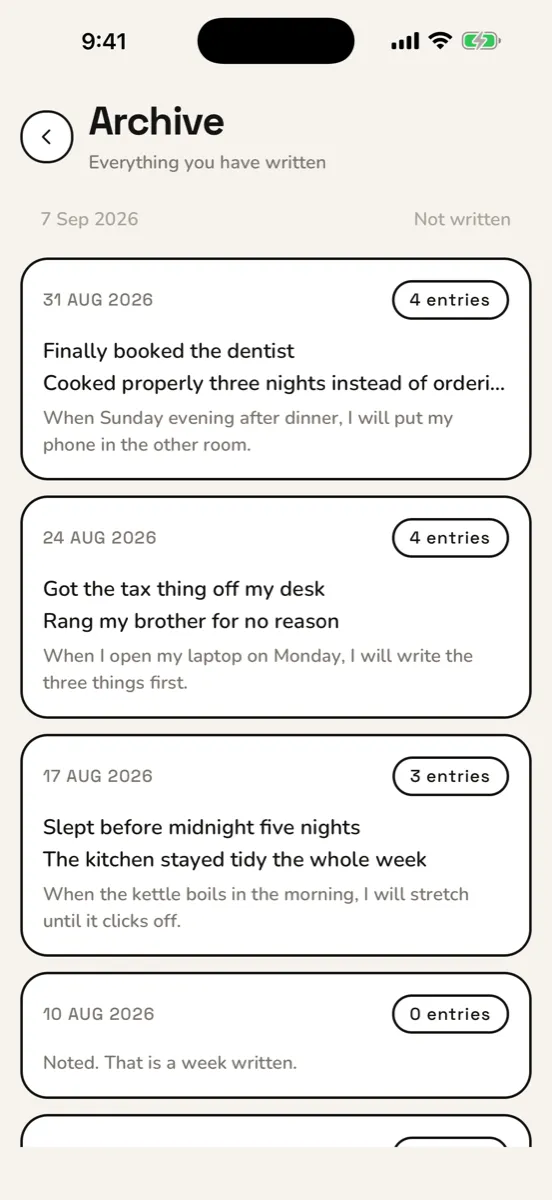
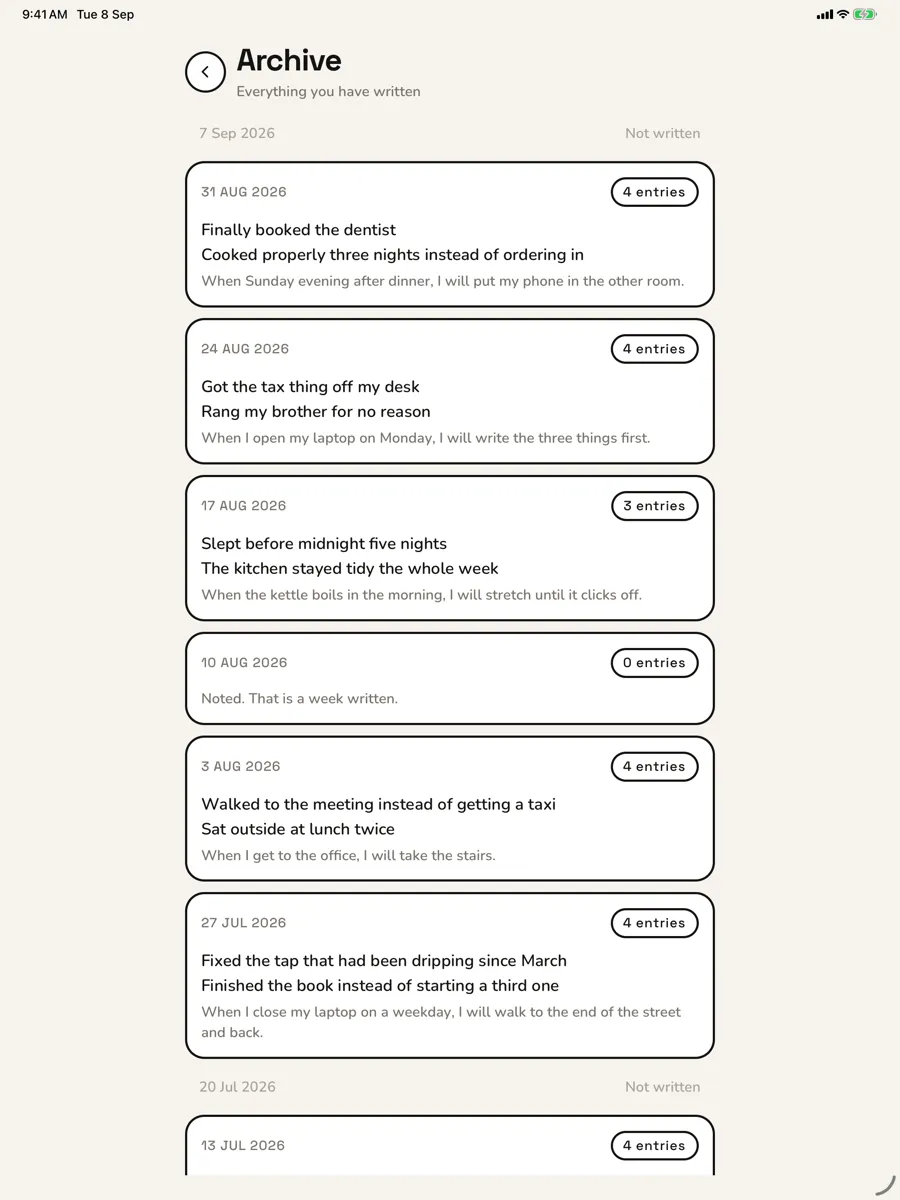
Chaque semaine que vous avez écrite, gardée sur votre téléphone et lisible des années plus tard. Quand une Note de patch revient plus tard comme Montée de niveau, l'app vous le dit et vous montre la semaine
Une partie impossible à perdre
Une semaine manquée est simplement sautée, en silence, sans rien à dépenser ni à racheter. Le niveau monte parce que vous avez écrit, pas à cause de ce que vous avez écrit
Papier et encre
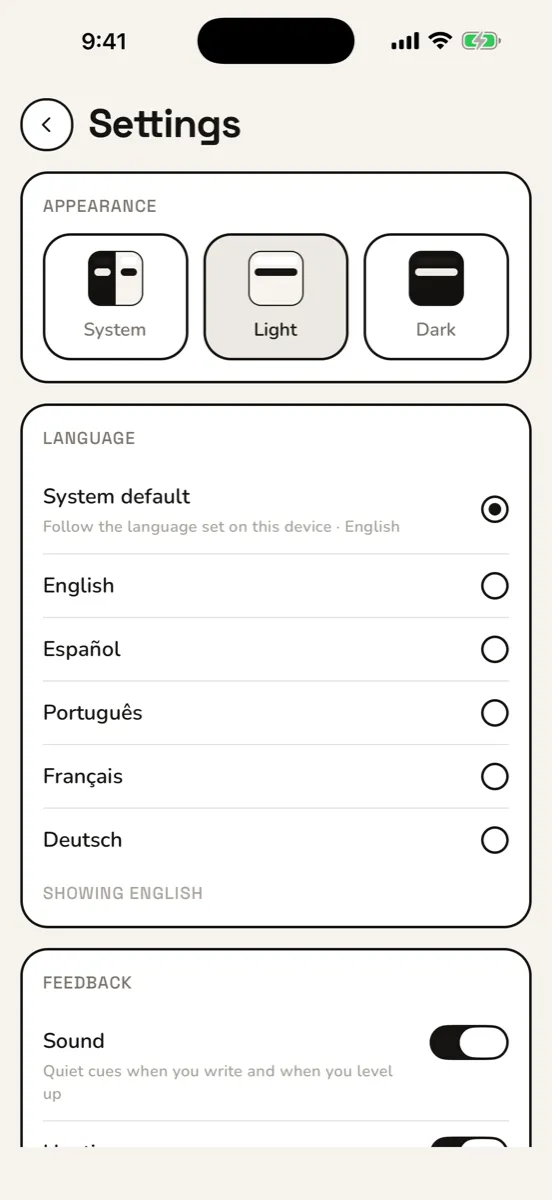
Un papier aux tons chauds, une seule encre noire, un renard pixelisé en 1 bit, des boutons dessinés à la main. Le mode sombre est le même dessin imprimé en négatif. Sans compte, sans serveur, personne d'autre ne peut le lire
Captures d'écran
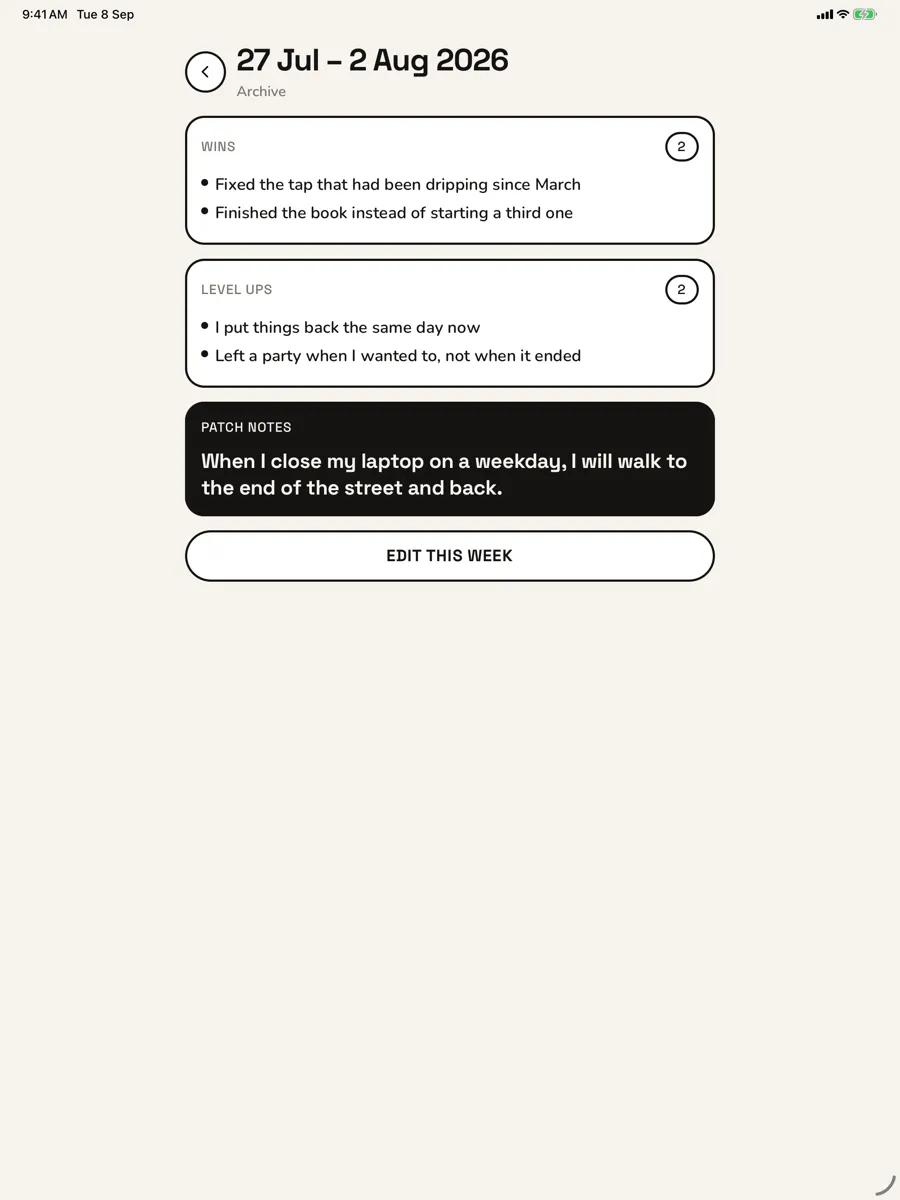
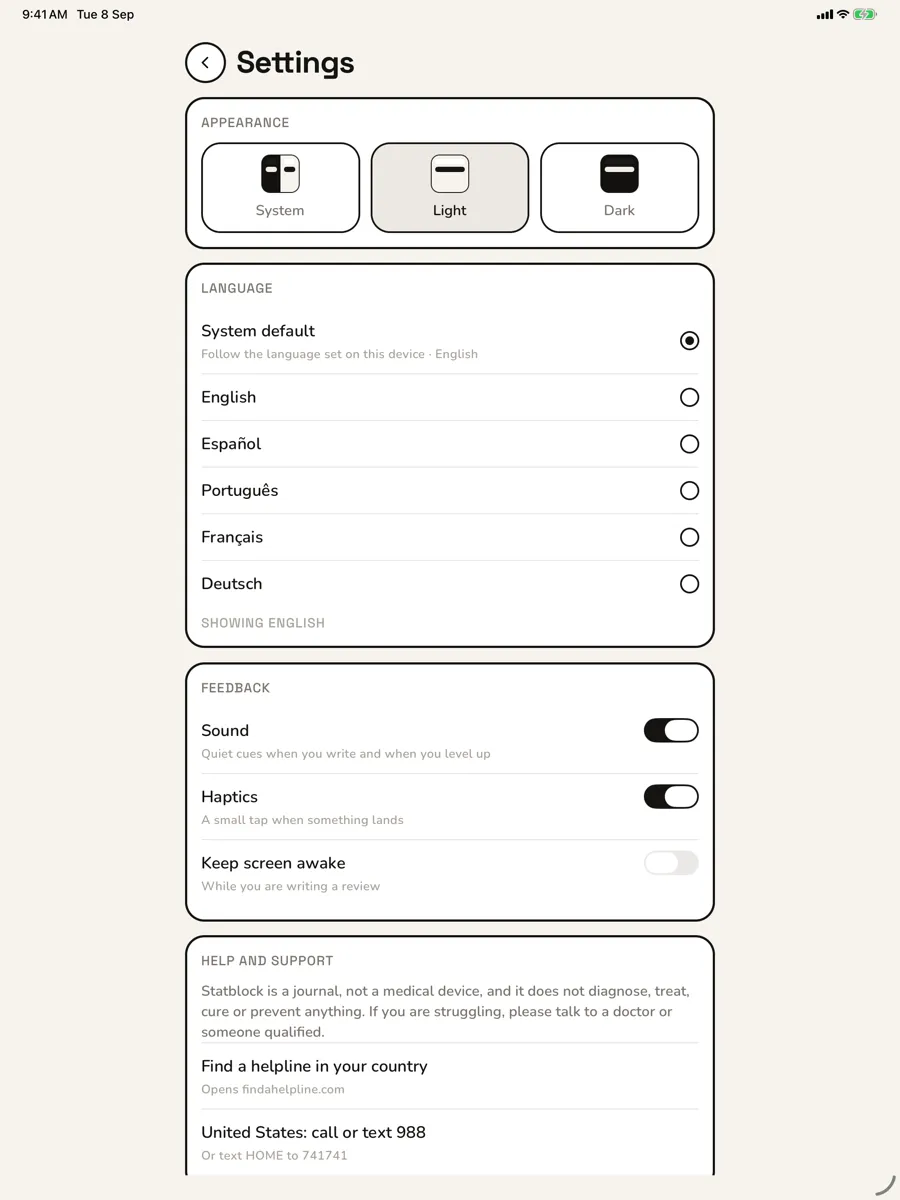
Le descriptif détaillé ci-dessous n'est pas encore traduit et s'affiche en anglais.
What it is
Once a week, Statblock asks you three questions and writes down the answers.
Wins — what went well. Level Ups — what you got better at. Patch Notes — one specific thing to try next week, and the moment you’ll try it.
That is the whole app. It takes five minutes and there is nothing to do the rest of the week except one optional tap a day.
Why the third question has two fields
Because that one is the part with evidence behind it, and the evidence is specific about the shape.
A plan phrased as “when ⟨a specific situation⟩, I will ⟨a specific action⟩” is one of the best-supported tools in behaviour change — a meta-analysis of 94 independent tests put it at a medium-to-large effect on actually doing the thing. What carries that effect is not motivation. It is having named a moment you will genuinely run into, so the moment does the remembering for you.
Which means a single box asking “what could you do better next week?” does not deliver a weaker version. It delivers none of it, because what people write in that box is “be more patient” — a way to be, not a thing to do, and not something you can encounter at half past seven on a Tuesday.
So it is two fields. When, and I will. One a week.
The level counts that you wrote, not what
This is the rule the rest of the app is built around.
A number that goes up when your week was good is a scoreboard for how your life is going, and on the week you most need to sit down and write something, it would tell you that you had gone backwards.
So Statblock’s level only ever counts entries written and weeks turned up for. A week where the honest answer was “nothing this week” scores exactly what a week of triumphs scores — because it is the same amount of showing up, and it is usually harder. “Nothing this week” is one tap, it counts, and nothing in the app looks disappointed about it.
There is no mood rating anywhere. No sliders, no faces, no one-to-ten.
A run you cannot lose
Miss a week and the run steps over it. Silently — no dialog, no warning, nothing to spend and nothing to buy back. Underneath it sits a count of every week you have ever written, which nothing reduces.
No notification will ever tell you a streak is about to end, because there is no state the app can take away from you.
The archive is the feature
The three questions are just how things get written down. What you are building is the record: every week, kept on your phone, readable years later — including the weeks you skipped, which show as gaps rather than being quietly hidden. A record that flatters is a record nobody can use.
And Statblock reads it back. When something you wrote as a Patch Note in March turns up as a Level Up in June, it tells you — and shows you the week, so you can go and check. It never says anything about your record that you could not verify yourself, and when it has nothing true to say it says nothing at all.
Nobody else can read it
No leaderboard, no friends, no sharing, no export to a feed, no account. There is no server, so there is no copy of anything you wrote anywhere except your own phone — not for us to lose, not for us to sell, not for us to be asked for.
Nothing you write is read by the app either. It is not scanned, categorised, or used to target anything.
What it is not
Statblock is a journal. It is not a medical device, it does not diagnose, treat, cure or prevent anything, and it is not therapy or a substitute for it.
There is a permanent, quiet link in Settings that helps you find someone to talk to wherever you are. It is always there, it is never triggered by anything you wrote, and it points at findahelpline.com rather than a list of numbers baked into an app — because a helpline number that has gone stale in an app store build is worse than none at all.
Where the ads are, and are not
Statblock is free and carries ads. They appear on the home screen, in the archive and in settings. They never appear while you are writing, and nothing you write is ever part of what an advertiser sees.
D'autres apps comme Statblock
-

Orange Reader for HN
Hacker News, lisible — huit flux, fils complets, un geste vers l’article.
-

Yearfold: One-Line Diary
Une ligne sur aujourd'hui. L'an prochain, elle vous attendra juste sous la suivante.
-

Fief: Habit Tracker Kingdom
Chaque habitude tenue bâtit votre ville.
-

Jornada: Recargos y Horas
Ce que valent vraiment ces heures.